


Words by Sheryl Nonnenberg
John and Sue Diekman did not set out to be art collectors. As young newlyweds, they took a trip to Scottsdale, Arizona, where they happened upon a gallery and saw a painting titled Sonora Confluence by James Conaway. As Sue describes it, “We didn’t know anything about art, but we loved the color and the movement in this painting.” They purchased it for their first home in Palo Alto and, as John says with a smile, “We felt real grown up.”
John and Sue still have that painting and proudly show it off to anyone visiting their mid-Peninsula home. That initial purchase led to a lifetime of acquiring the art collection that now fills the rooms of their home. The idea of sequestering their art in storage has never appealed to the couple, so they display their whole collection around their residences and John’s San Francisco office. The collection has grown to over 100 pieces, each and every one steeped in stories and memories.
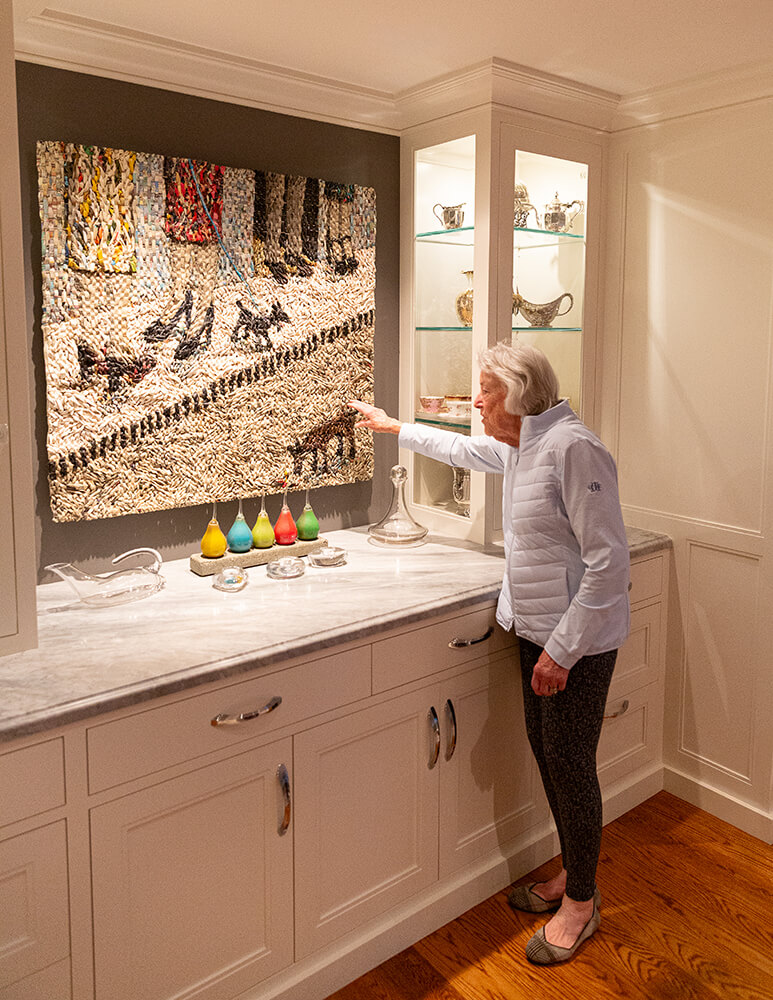
Although their collection has no specific theme or parameters (post-war American art, for example), the couple has stuck to one important requirement: they both have to like whatever they acquire. How do two people always agree on something as subjective as art? Sue admits, “There is usually someone who sparks first.” She offers the example of a watercolor that she fell in love with, Sentinels of the Goldfields by artist Judy Holding. John admits, “I was not completely sold on it at first,” adding that watercolor has never been his favorite medium. Upon further consideration, he realized that the landscape of the Australian Outback would be a good reminder of their travels. “We think of those wonderful trips every time we pass it in the hallway,” says Sue.
This is the glue, the foundation, of their very personal art collection. “That is the nice thing about specific pieces of art,” says Sue. “It reminds you of people, of places you have been and experiences you have had.”
Without knowing it, the couple has followed the age-old advice for art collecting: start small, buy what you love and educate your eye by visiting galleries and museums. Art of every media fills the cozy living room and, as they describe the various pieces, another fact comes to light—the importance of relationships with artists whose work they collect. Take two bronze sculptures by English artist Paul Day. On a vacation to Burgundy, France, they happened upon Day’s work in a gallery, bought several pieces, then became friends with the artist. Getting together with Day and his family has become part of their summer sojourns.
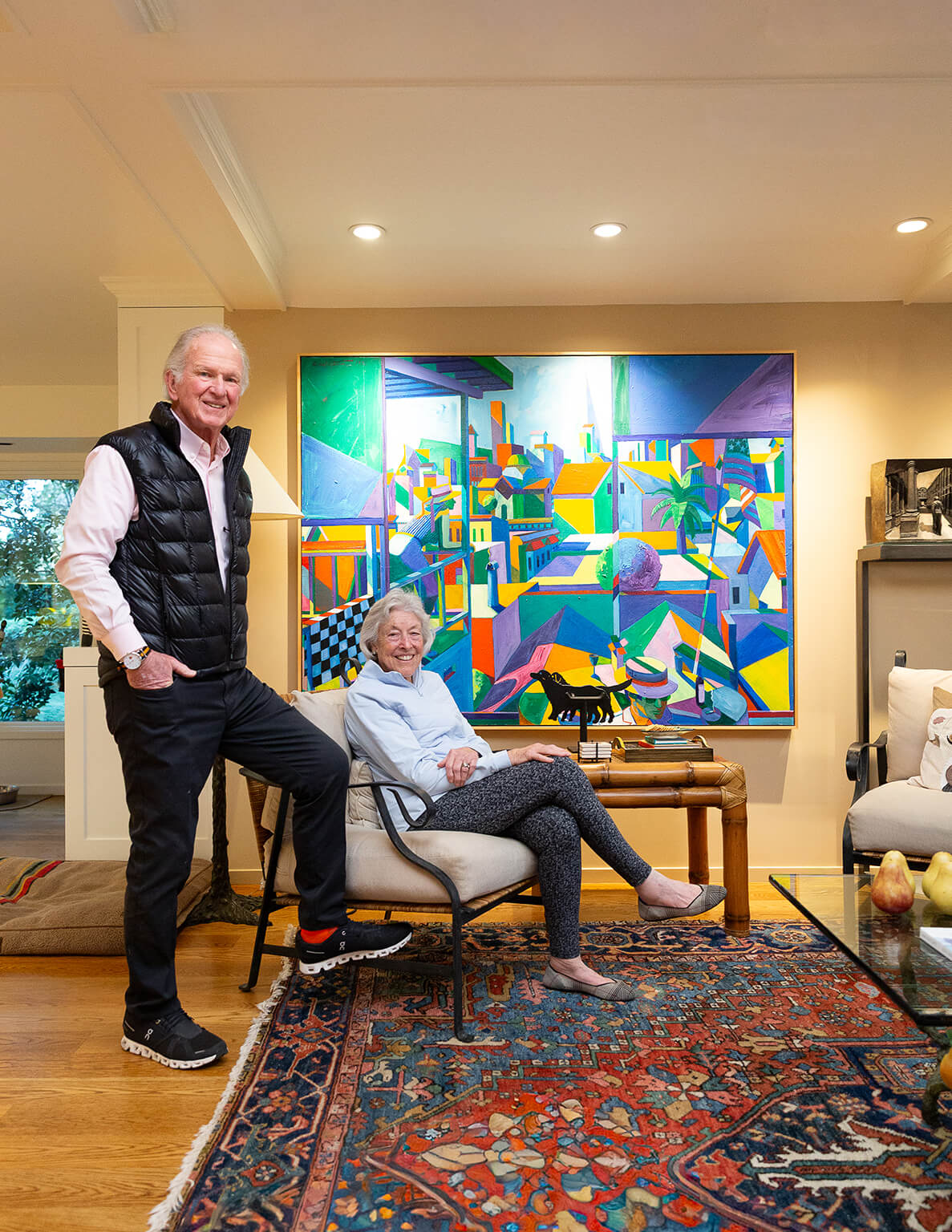
John also highlights California painter Roland Petersen’s boldly colorful San Francisco Rooftops, which has pride of place in the room. He has a special affinity for the artist’s signature brilliant cobalt blue paint and reminisces fondly about visiting the artist’s studio. “He is a character and a really good guy.”
While they have purchased art from galleries—Paul Thiebaud and Haines galleries in San Francisco, Crown Point Press and Pamela Walsh Gallery in Palo Alto, to name a few—the couple have never utilized the services of an art consultant and love to work directly with artists when they can.
There are several whose work they have collected in some depth. Like Wayne Thiebaud, who was the subject of a recent solo exhibition at the Legion of Honor Museum. They own numerous prints by the artist as well as one of his signature food paintings, Six Cakes. “If I could, I would buy a Thiebaud every day,” declares John.
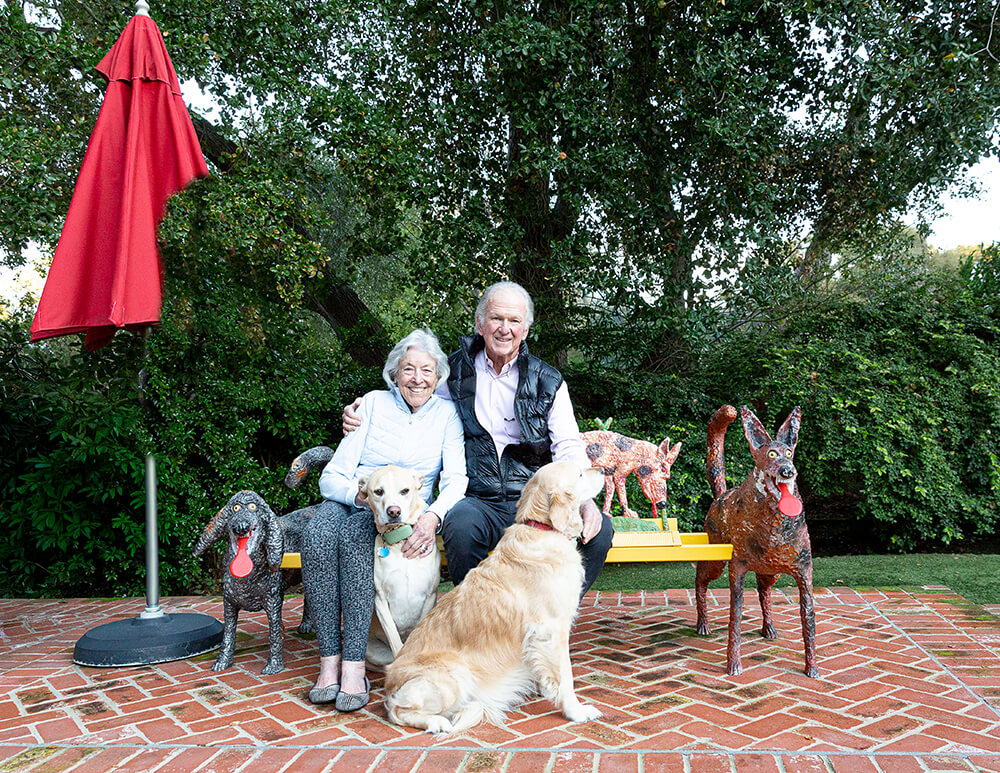
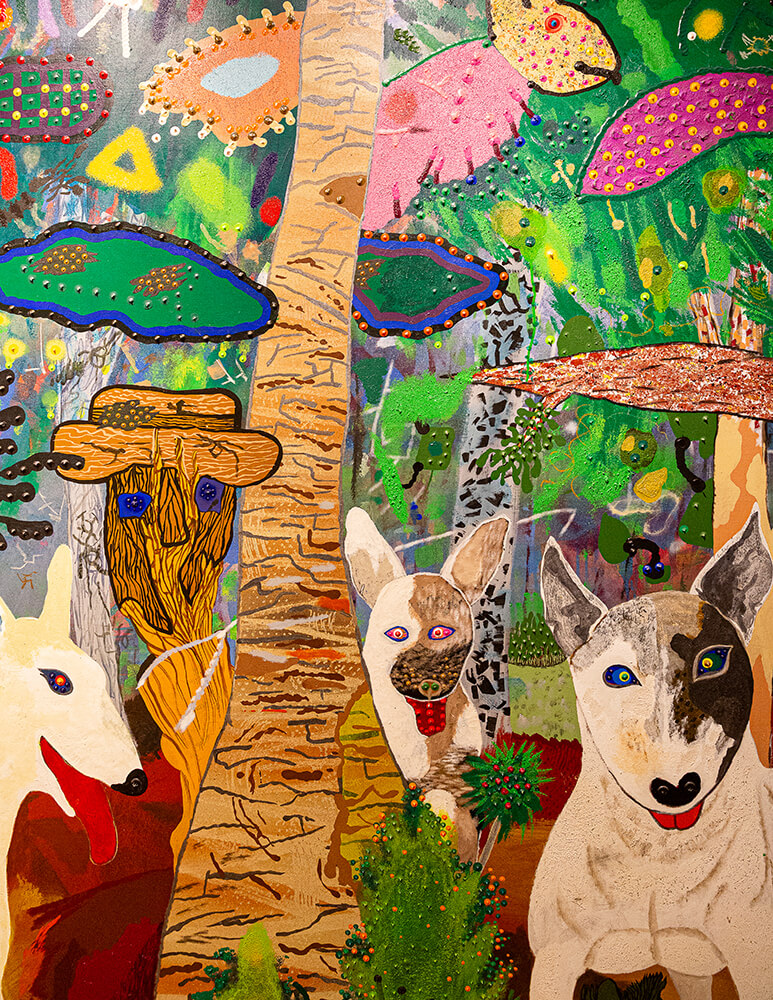
They also have a great affinity for the work of Roy de Forest, who is known for his affiliation with the California Funk Movement of the 1970s. As dog lovers, Sue and John appreciate that canines are the subject matter of several of his colorful, almost psychedelic mixed-media works. They enjoy sharing how de Forest visited their home, saw a sculpture of his entitled Dog Bench and promptly decided it needed to be reworked. “He literally showed up one day, took the old one and made a new one,” John says with a laugh. It’s obvious that this quirky interaction only adds more value to the piece for the Diekmans.
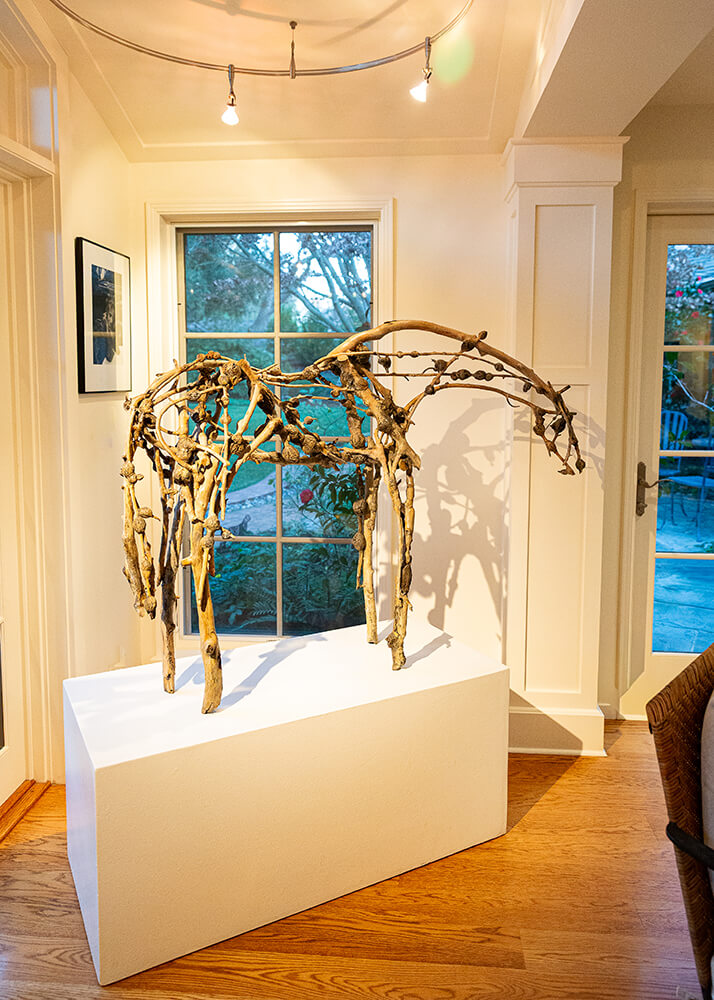
English sculptor David Nash also holds special interest for the couple. “We met him when he had a residency at the Djerassi Resident Art Program,” explains John. The Diekmans own several of his early-work wood sculptures, all carved with a chainsaw and intended to be rough surfaced. John expresses amazement at the amount of control the artist has in carving out the various types of wood, including oak, madrone and walnut. Now friends with Nash, they also proudly display a collection of pastel Christmas cards sent from the artist over the years.
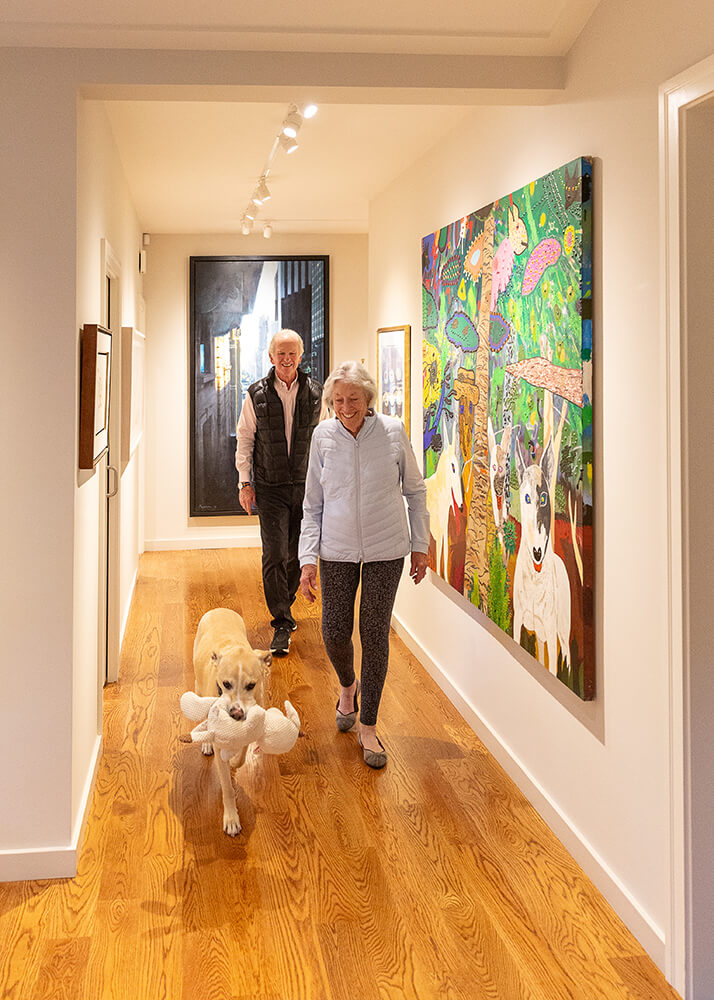
Every once in a while, a special work requires special accommodations. One of their largest pieces, a painting titled Above Fifth Avenue by Ben Aronson, which reminds them of enjoyable visits to New York City, required more space. So the couple remodeled a hallway, making it wider and higher for optimal viewing of the seven-foot-tall painting.
As the collection has continued to grow, the overflow of art has advanced outdoors. Large-scale works by Bruce Beasley, George Rickey, Gene Flores and Jesus Moroles grace the yard. Whenever possible, John and Sue allow the artists input as to where their work will be placed.
Sue points out a lovely bronze sculpture of a woman by former Stanford professor Nathan Oliveira, which stands outside the front door—a Christmas gift from her husband many years ago. John laughs as he remembers the effort it took to install the piece in a large cement plinth. “It’s never moving!”
Which raises the question of the collection’s future. After much discussion, selected works will be gifted to both Stanford University, where John and Sue met as graduate students, and to Princeton University, where John earned his undergraduate degree. Other pieces will be gifted to family members.
Are they still collecting? John replies, “Only if we have room.” Sue is quick to add, “We don’t, so the answer is no.” And yet, when asked if they could, perhaps, move things around to accommodate something new that they both really liked, neither said no.
The Diekmans clearly have enjoyed their collecting journey as well as incorporating art into their everyday life. “I don’t think of it as ‘acquiring art’ so much as having art that I love around me,” reflects Sue. “For me, art evokes memories and emotions that are relaxing. Art also makes me curious. I look at a piece of art and wonder what the artist was thinking and wanted to convey to the viewer. Most of all, art makes me smile.”