


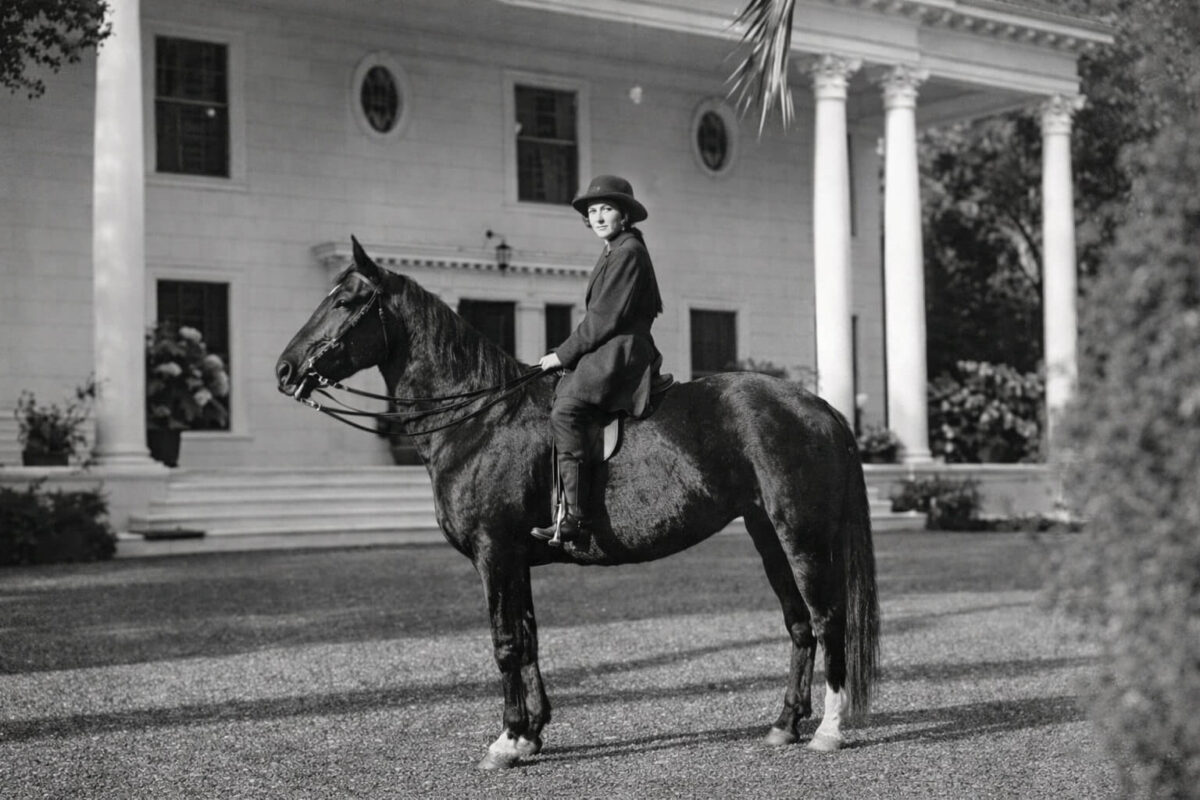
Though most homes don’t survive a century, giving way to the bulldozer of progress, a precious few endure, bearing witness to bygone eras. One such gem, a Colonial Revival beauty built in 1902, stands as a testament to the intriguing history of Atherton.
But before meeting the house itself, it helps to step back into the world that shaped it. At the turn of the 20th century, the Peninsula was experiencing a remarkable shift from its wilder ranch roots to an era of grand country estates. Before the affluent descended on San Mateo County with an appetite for pastoral luxury, large swathes of the region—including the future town of Atherton—belonged to a 35,000-acre parcel of land called Rancho de las Pulgas where the Arguello family raised cattle and horses. By the mid-1800s, however, the family began selling off portions of land to San Francisco’s early elite, city dwellers eager to swap foggy urban cityscapes for lavish summer homes. They craved a setting where they could spend sun-drenched afternoons in their sprawling gardens and on long idyllic horse rides through the countryside.
One of the first to make the move was Faxon Dean Atherton, a Massachusetts-born merchant with a thriving shipping business. He built his estate, christened Valparaiso Park, in Fair Oaks, an area known for its ample trees that would later bear his name. Atherton’s peers followed suit and soon estates were cropping up everywhere. Nearby estates included Linden Towers, a “white castle” of cupolas and turrets, as well as Fennwood, with gilded detailing, a stained-glass skylight and a two-bedroom “guest tower.”
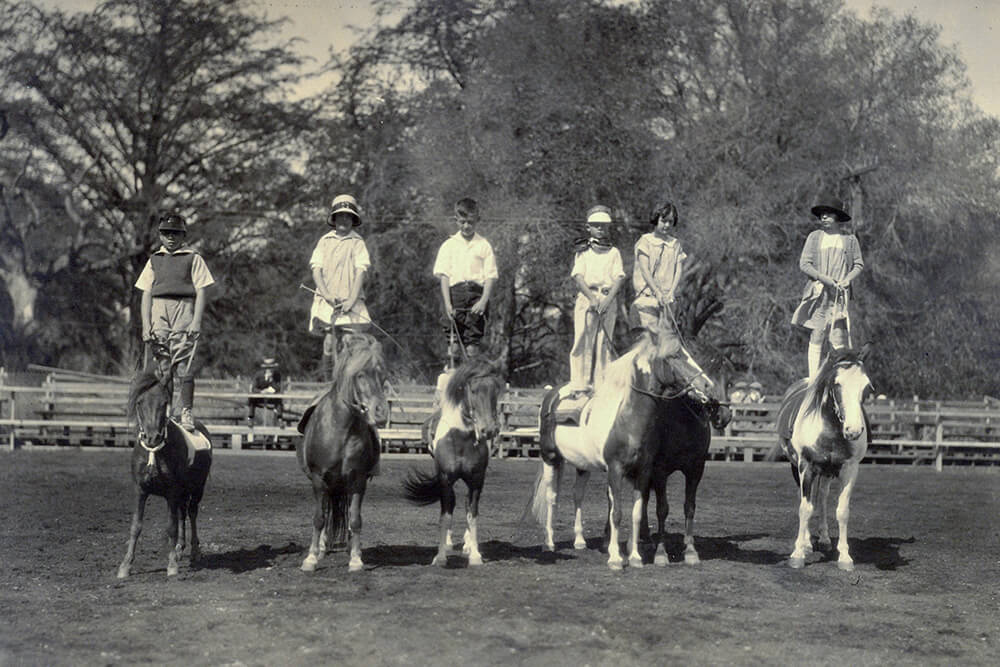
Photo Above: Courtesy of the Menlo Circus Club / Cover Photo: Courtesy of Donna McMaster. This image was enhanced by AI rendering.
Our Colonial Revival, nicknamed Gateways, was completed in 1902 for Joseph Frank, a tanner who made his fortune churning out tons upon tons of leather hides from his factory each month. Sadly, he barely had time to settle in. After Joseph’s death two years later, the property passed to the Weir family. It was their daughter, Eleanor Weir Tilden, and her girlfriends who hosted the first Menlo Circus Club event on the estate’s grounds in 1920, performing with their ponies and other animals to raise $500 for the Stanford Convalescent Home (now Lucile Packard Children’s Hospital). The oldest of the girls at 14, Eleanor acted as ringmaster. She even roped her goat into the act with some jumping tricks.
Passing hands several more times over the years, the residence came to new owners in recent months. They immediately fell for its Old World grandeur and determined to restore it to its former glory. “It was like taking a step back in time,” one of them recalls of their first encounter with Gateways. “When you walk up to it, it has such a presence about it.”
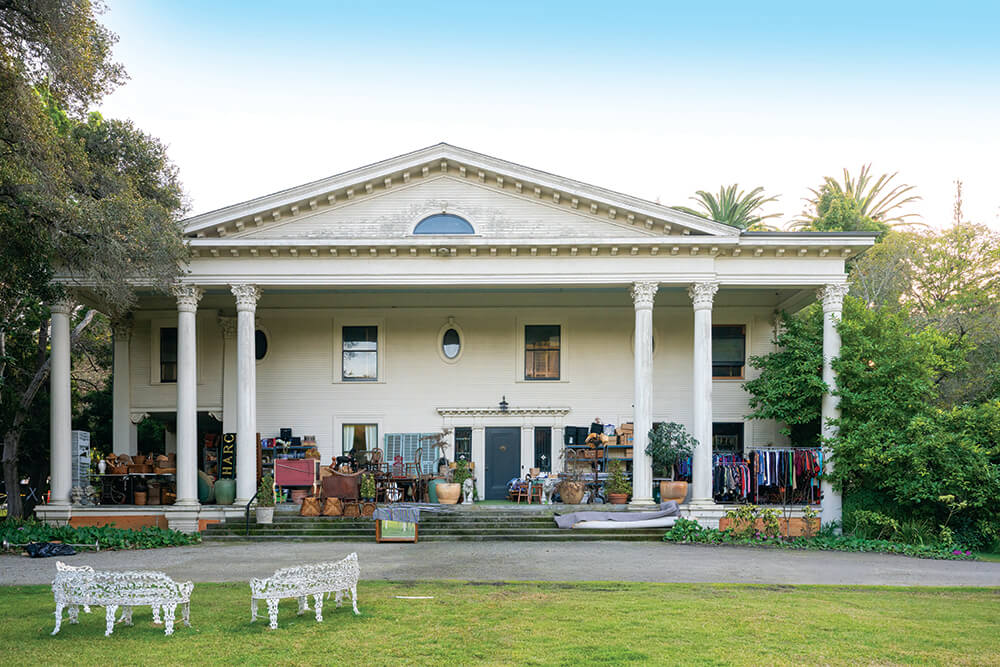
Photo Courtesy of: Donna McMaster
As you come up the drive, “It has this Southern belle kind of feel about it,” she describes. “The wraparound porch speaks of something in the deep South with the big columns.” Step inside the foyer and discover a dreamy cloud fresco on the ceiling that seems to swirl around the chandelier. Rich redwood paneling adorns many of its walls, while intricate tilework and oak floorboards grace the ground.
The house is also distinct in that its interior reflects several different eras. While the living room has Victorian elements, “The butler’s pantry is very American colonial,” describes the owner. Then, “right next to it is the dining room, which to me, is very much Arts and Crafts,” she says, noting the room’s tasteful coffered ceilings, built-in china cabinet and redwood pocket doors. The owners intend to preserve and elevate these design details. “I like the possibilities of that,” she says. “I’m kind of an eclectic person where I just mix and match what I like.”
One thing remains constant throughout the years. After the Weirs’ circus for charity, another one of the home’s previous residents William “Bill” Lee would establish several nonprofits and use the home as a place to collect donations—on one occasion flooding that sprawling front porch with donated mattresses for those in need, and on another, piling it high with thousands of boxes of shoes. The new owners intend to continue using the property to give back to their community. “I think that’s what this house lends itself to,” the owner reflects. Surely this heralds the preservation of this mid-Peninsula residence—both its history and its legacy—for many generations to come.
With appreciation to Stephanie Elkins, who represented the seller, for introducing Punch to this article.