


Words by Johanna Harlow
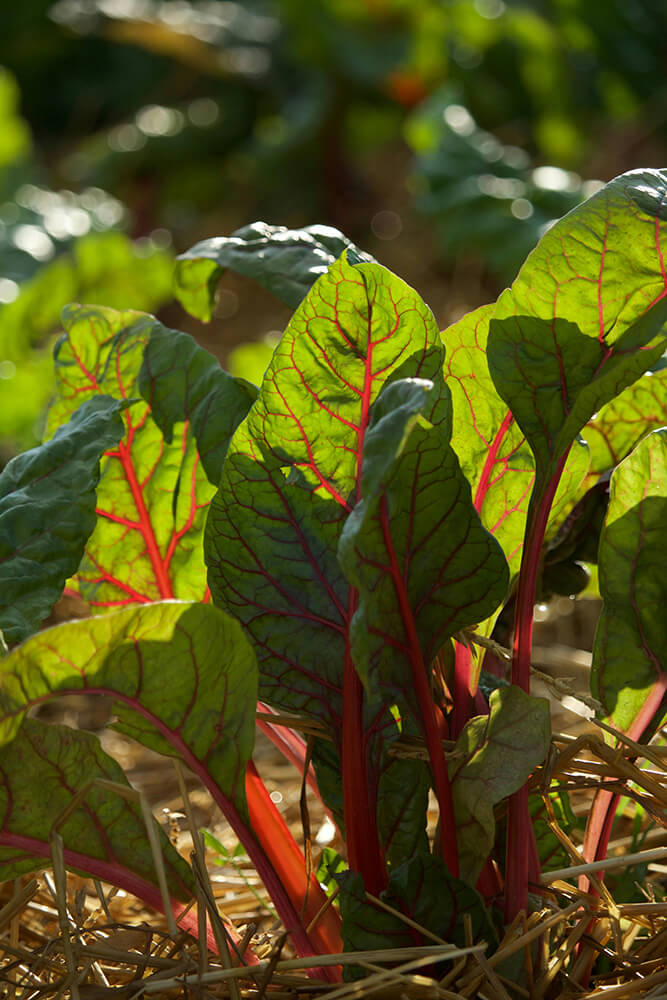
Tucked away on the outskirts of Stanford University, neat rows of crops stretch out across six peaceful acres. Unlike commercial operations, every row at the school’s O’Donohue Family Educational Farm reveals a shift in vegetation, producing a pleasing profusion of colors and textures. There are crinkly kale leaves and glossy chard flushed with ruby red stalks. Bursts of bright orange marigolds and blue borage. Feathery carrot tops and pops of bright red peppers.
Farm director Patrick Archie points out a section of non-harvestable cover crops: a flurry of wild clover, legumes and oats, which enrich the soil and “reset” the rows. “Once they start to flower, we come in and mow them down,” he explains. “Then we till them into the soil and they compost.” Farming isn’t about instant gratification. A healthy operation requires careful preparation and patience with the process. And in the case of the O’Donohue Family Educational Farm, this applies to both nurturing the ground and cultivating the community growing up around it.
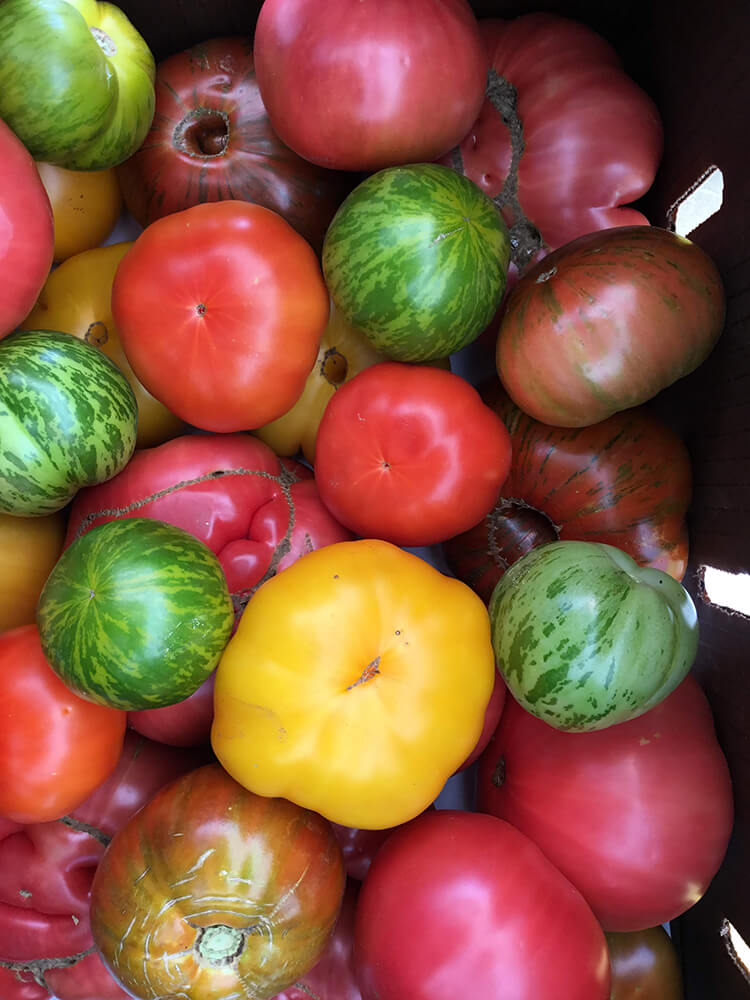
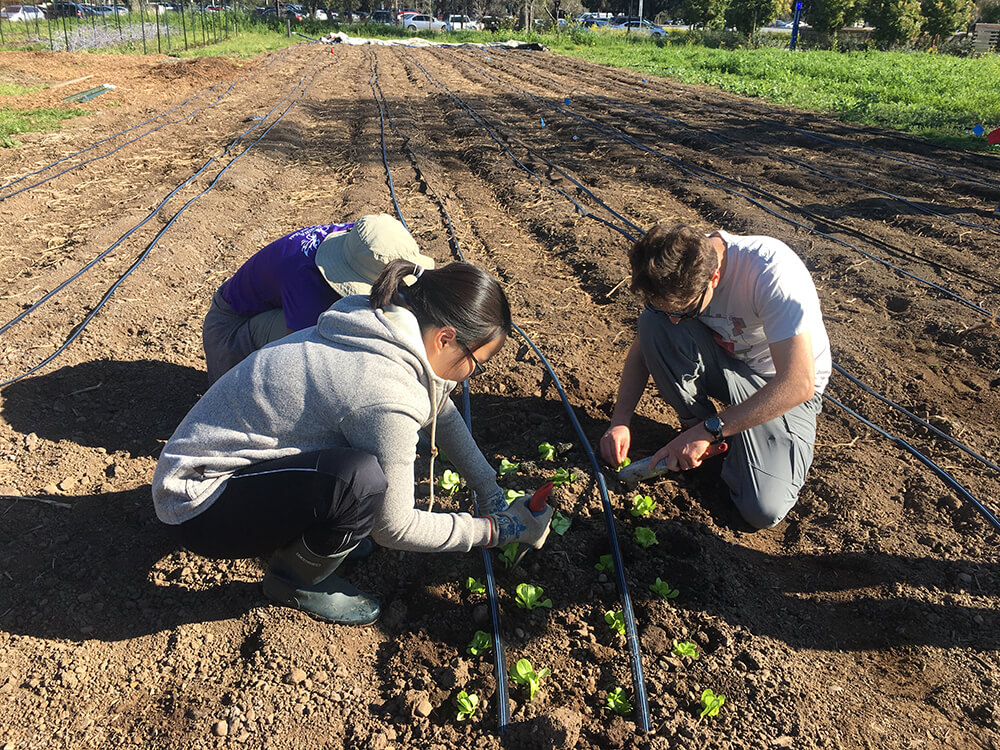
Since its inception in 2014, the farm has gone from an underutilized plot of weeds to a thriving, verdant hub. Over 15,000 pounds of organic fruits, vegetables and herbs feed students at Stanford’s dining halls and go to the Teaching Kitchen @ Stanford each year. The farm’s sunflowers, snapdragons and 27 other kinds of blooms bring color to campus events. It hosts countless workshops and cross-disciplinary events and also functions as a living classroom. Twice a week, volunteers find a little earthy R&R while tending the grounds. “Come walk around and see,” Patrick invites. So off we go.
Breaking Ground
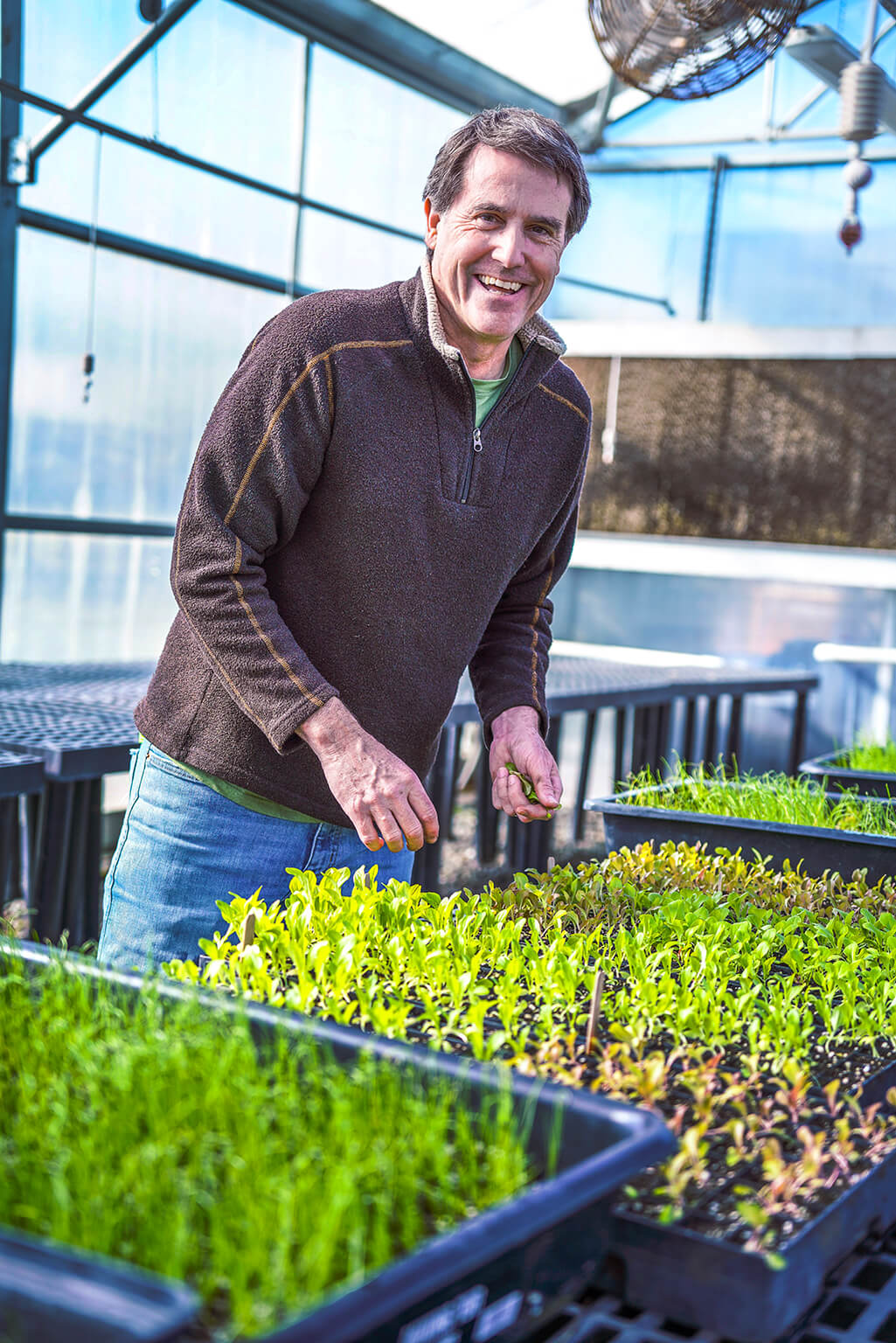
As Patrick shows me around the grounds, it’s evident that this is a man in his element. He uses words like “gorgeous” to describe chard, “beautiful” for the onions. Over here, he reflexively bends down to do a bit of weeding. Over there, he pinches off a sprig of cilantro and pops it in his mouth.
In addition to coordinating the farm’s team and programming, Patrick also teaches agroecology and sustainable agriculture at Stanford. During the spring quarter, he instructs his Urban Agroecology students in a classroom located in the farm’s main barn. A rolling overhead door with clear panels allows students to soak in the splendor of the fields. “Seeing students making connections between lectures and readings and actually doing things in the field always brings me so much joy,” says Patrick.
In fact, he credits students with planting the idea for this place. They’ve been writing proposals for decades. “They were learning about sustainable agriculture, but they knew that you can’t just read about it and listen to people talk about it. You need to do it,” Patrick says.
Pamela Matson, former dean of Stanford’s School of Earth, Energy & Environmental Sciences, understood the students’ desire to surround themselves with green leafy things and get a little dirt under their nails. She hired Patrick to make the farm a reality. What began as a plan for a single-acre farm grew to six acres, thanks to a generous donation from Laura O’Donohue of organic Snow Hill Farm and her Stanford alumni husband, Kevin. “I met with all the campus planners and toured over the whole campus and we finally settled on this space,” Patrick says. At the time, the area was all oak trees and invasive weeds.
As Patrick plotted his first crop, he knew he wanted to turn heads. “I wanted to show that, ‘Yes, we’re a farm! We’re here!’” That said, he had a few factors working against him: limited resources, no team, and parched land from California’s crippling dry spell. “So I planted an ancient Indian wheat called jammu and an Ethiopian barley,” he says. “Both of those being older varieties are really, really drought-tolerant. So we had this beautiful field of grain out here.” That spring, they planted their first block of vegetables.
Growing the Farm
Though the farm was up and running, they were lacking an on-site classroom, bathrooms and office space. “We made do,” Patrick says. He shows me the initial greenhouse, propagation and planting building as well as the “Wash and Pack” building where harvested produce goes to be cleaned and boxed before it’s sent to the campus dining halls. A tall stack of cheery yellow bins await use in the corner—like open arms ready to receive the harvest. “We used that Wash and Pack space for everything,” Patrick describes. “I would teach classes there. We had yoga classes over there. We would just roll tables out.”
As the program grew, a gift from the owner of Elk Stone Farm allowed them to expand with the Terry Huffington Barn, which includes a classroom and office space to hold Patrick’s growing team. “This has been such an incredible addition,” says Patrick, showing me the barn’s covered patio with a stylized wooden slat façade, an idyllic place for al fresco dinners and other gatherings. Sunshine floods through the slats, creating a pattern of striped shadows.
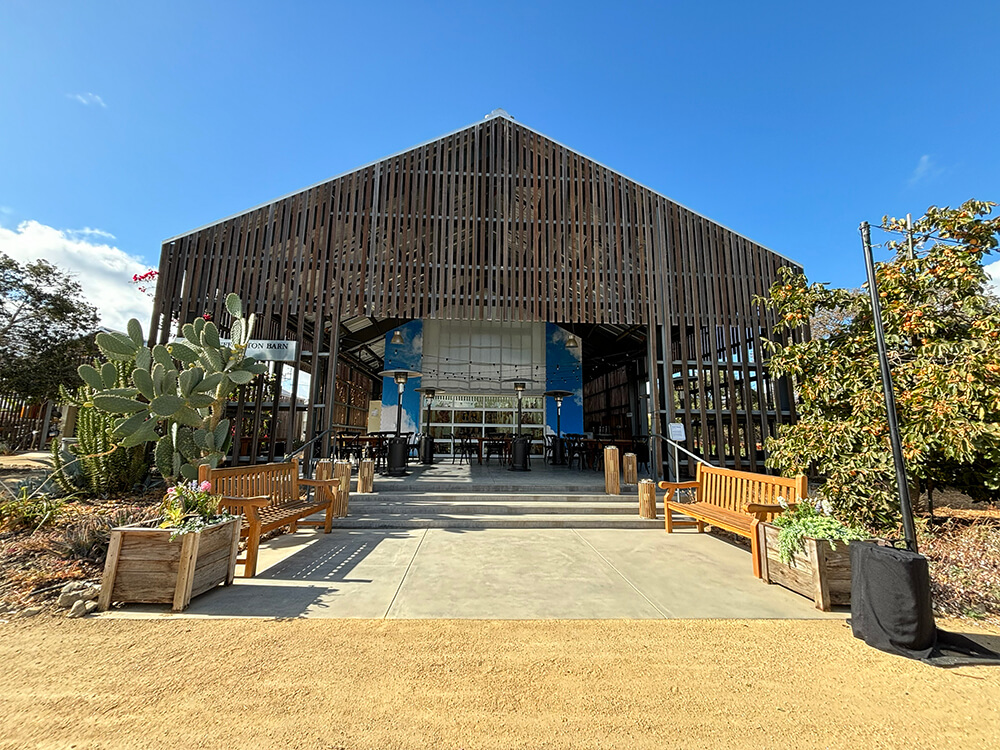
The addition of a fence was also cause for celebration on the farm—it meant they could plant fruit trees, from apples and apricots to persimmons and pomegranates. “Deer will just strip baby trees. They’re like candy to them,” Patrick explains. He beelines it for the north side of the farm and the inviting orange and yellow splashes of the citrus grove.
“There’s 40 different kinds of citrus. Here, come taste some.” Patrick picks an Australian finger lime (also known as a caviar lime) and instructs me to bite the top off. “Give it a squeeze,” he encourages. I’m delighted when tiny green beads bubble up within. They burst on my tongue. “Really great on tacos,” he notes, before passing over a cheery yellow kumquat. “It has sour flesh, but sweet skin.” As I chew, I inspect a Buddha’s Hand tree. To me, its fruit looks less benevolent than its namesake and more like some tentacled alien. “It’s amazing how humans and plants have worked together to create so many kinds,” Patrick marvels. “It’s Mother Nature-human symbiosis over thousands of years.”

Hands-On Approach
Though the farm is quiet during my visit, I see signs everywhere of the people who treasure this place. On the placard for the onions, a student has scribbled a sketch of Shrek. On another marker, someone has scrawled the words “grow strong,” as if cheering on the plants. To me, these feel like love notes from a community making a space its own.
“There are classes that are taught out here all quarter long, but then there are other classes that will come and just do a session or two,” Patrick continues, pulling me back to the present. He points out a row of wild leeks planted by a biogeochemist studying the effects of traditional harvesting methods on soil fertility for her doctorate. “The Cherokee would harvest these greens in the late winter and early spring and boil them to make them more edible,” he says.
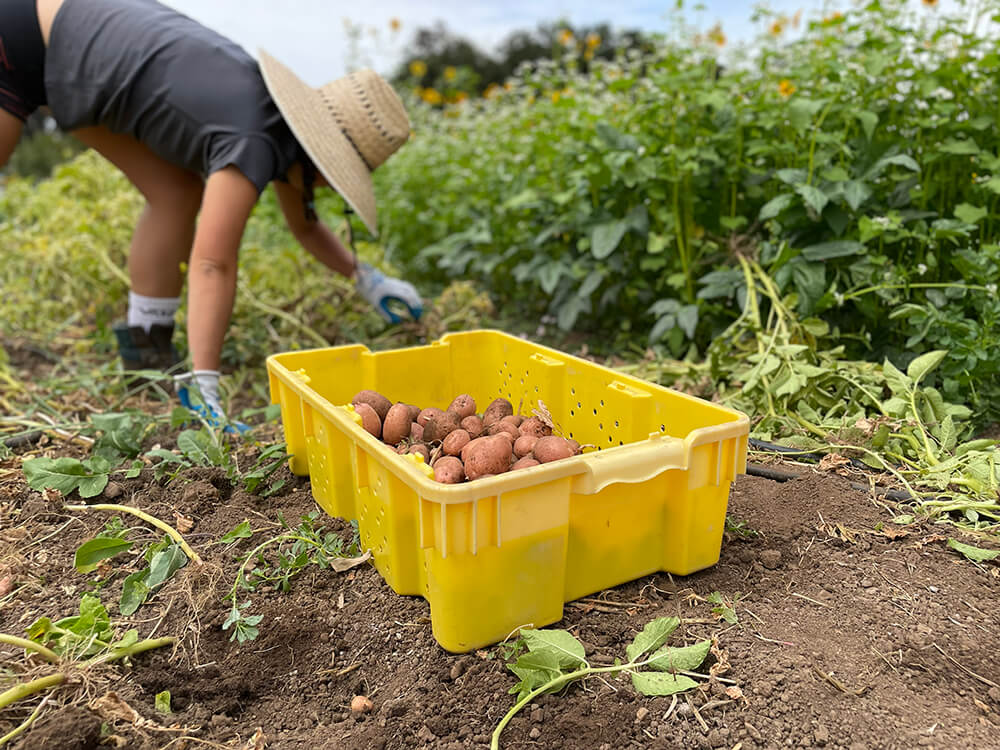
The farm draws students from across disciplines for research projects, including a recent engineering capstone focused on developing rapid crop-drying systems to support farmers in India. Meanwhile, Intro to Birding students have come in flocks, identifying and recording over a hundred species to date. Also spotted: clusters of Drawing 1 and Wild Writing students in the fields, sketchpads and notebooks in tow.
Harvest Time
Nature and creativity have always gone hand and hand, and the farm has become a fruitful place for artful expression. The location welcomes author events (most recently Liz Carlisle’s new book Living Roots), live music, line dancing and readings. The latter, Rooted Words, is hosted by environmental communications lecturer Tom Hayden, giving students, staff and community members the chance to read their written work. “Tom likes to do it under the Blue Oaks,” notes Patrick.

“Music and arts are really an important part of agroecological expression. So when you create a farm, it’s a cultural space as much as it is a productive space,” says Patrick. While education remains the primary mission, he believes in a broader, more holistic model. “Modern agricultural systems, for the most part, are about extracting commodity value from the land and exporting that value for profit. With agroecology, we’re really interested in, ‘How do you sustain communities?’ And ‘What role does food and land play in that?’”
Meaning? “The people are a key component as much as the land is,” he asserts. “It’s about building spaces for people to come together to produce food, to share food with each other and to sustain their communities.”
Patrick wraps up our tour at a plant-lined patio anchored by a pizza oven. “I wanted an outdoor kitchen right at the heart of the farm,” he says. “The farm is about growing food, but really it is about growing community. And you do that by sharing food.” Whether it’s a campus chef leading a cooking class, contenders tossing dough in a pizza-making contest, or students testing (and tasting) recipes for a new cookbook, the camaraderie is unmistakable.
GET YOUR HANDS DIRTY
Plant, weed and harvest on the farm on Wednesday and Saturday mornings by registering at farm.stanford.edu/volunteering