


Words by Johanna Harlow
It’s hard not to get swept up in the verdant splendor of Filoli’s blossoming cherry trees, daffodil meadow, succulent-lined sunken garden and seemingly endless flurry of flowers—but the historic manor at the center of these gardens deserves your attention too. Will you come explore as we step into this 54,000-square-foot Georgian masterpiece and unlock its stories?

Cover Photo: Courtesy of Larissa Clevland Photography - Filoli / Photo: Courtesy of Liberte Reilly - Filoli
Agnes & the Architect
To acquaint yourself with the Filoli mansion, you need to understand the hands that shaped it and the minds that imagined it. Constructed between 1915 and 1917 in Woodside, this 56-room home was built for the aging and affluent Agnes and William Bourn, who forged their fortune from the Empire Gold Mine and Spring Valley Water Company. “They said, ‘A place to grow young,’” says Willa Brock, interim director of collections and interpretation at Filoli. She notes that this wasn’t the couple’s first house—it was their sixth. “Their move down the Peninsula was in line with this fashion for a lot of wealthy San Franciscan families to build country estates where there was more land.” It was also an escape from the “chaos of the city” after the 1906 earthquake and fire.
The Bourns turned to their friend and renowned architect Willis Polk, who had already designed several buildings on their behalf, including a home on Webster Street in San Francisco. That previous project “is in this heavy, dark, clinker brick style that’s very different from Filoli,” Willa notes. Not one to be tied down by just one aesthetic, “Willis was willing to mix and match styles to create something new.” He styled this new home as a Georgian mansion with California sensibilities (like its “Flemish bond” brickwork and Spanish tile roof).
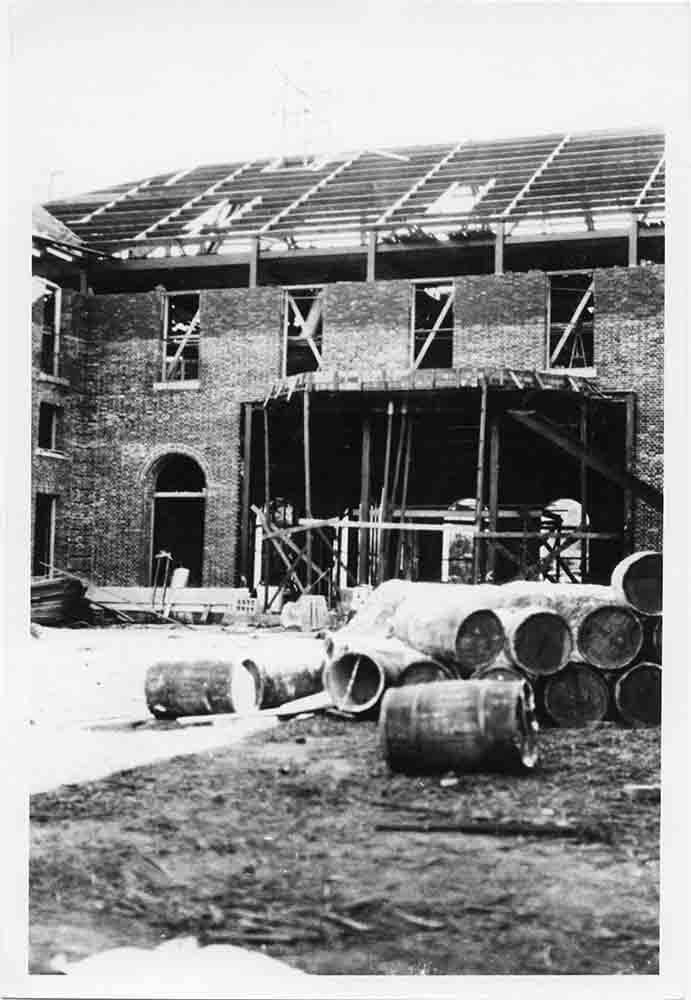
Photo: Courtesy of Filoli
Equally influential in the building’s conception was the lady of the manor. “We talk a lot about Agnes, actually,” Willa says. “I know often, when you’re hearing about grand estates, you hear about the male founder who’s made the money, but Filoli was really Agnes’s vision in a lot of ways.” Agnes worked closely with Willis on the details of the home—and whenever Willis’ design schemes spiraled into extravagance, it was often Agnes who kept him in check. “Polk came in with these very grand designs,” Willa notes. “The Bourns had a slightly humbler vision.”
What makes for a “humble” mansion? Willa points to the entry as a prime example. “You’re not immediately greeted by a very impressive horseshoe staircase as you might get in some other grand estates,” she explains. “The stairs are actually off to the side, which just doesn’t feel as over-the-top or in-your-face.”

Photo: Courtesy of Filoli
That’s not to say that their mansion lacked luxury. The reception room had a lady’s and gentleman’s cloakroom where guests could freshen up before being ushered into the entertaining space by the Bourns’ English butler (“at the time, very fashionable,” Willa notes).
The couple insisted on a modern manor. William, a forward-thinking man, made sure the home was fully wired for electricity. “That was very William Bourn. He wanted the best. He was always looking to be ahead of the game,” Willa says. “The electrical system still is going strong.”
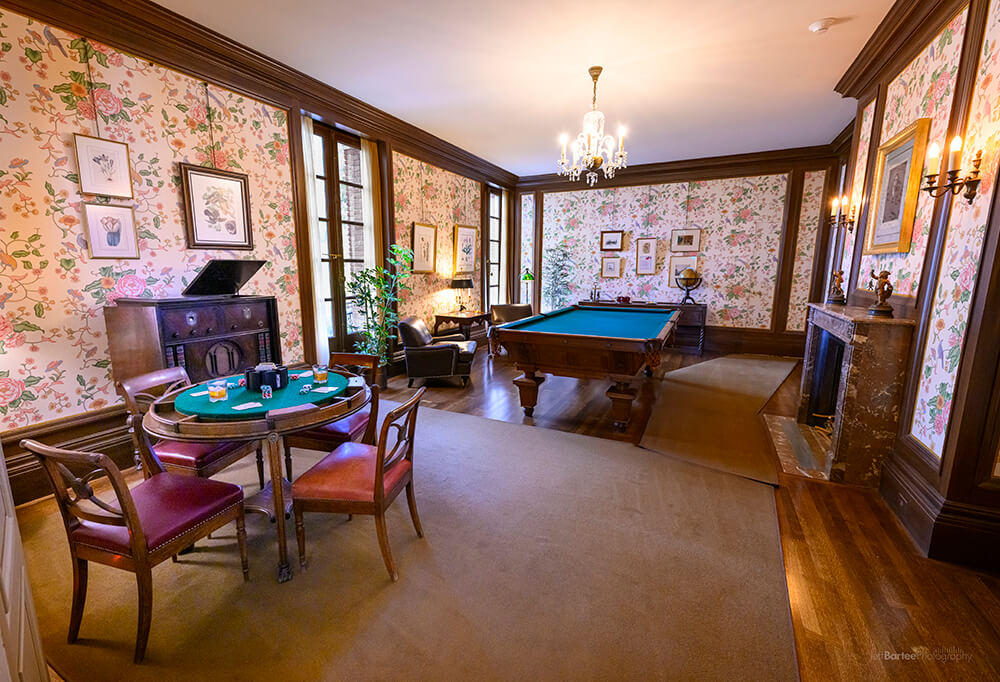
Photo: Courtesy of Jeff Bartee - Filoli
Resplendent Rooms
You need only peek into Filoli’s rooms to recognize their artistry and attention to detail.
Take the Gentleman’s Lounge. Only recently restored based on a black-and-white photo and a scrap of the original wallpaper, the room’s walls display a striking botanical design with large peonies and playful dark wood bowties are inlaid in the oak floor. “Now you walk in and you really get a dose of William Bourn’s personality, I think—which maybe challenges our assumptions of what a gentleman’s lounge might look,” Willa says.
Visitors should look next in the library. “Apparently at the time, you could purchase a replica of a whole room and they would come and install it for you,” Willa says. Filoli emulates the book haven at Buckinghamshire’s Denham Place. “It’s very striking. You walk in and it’s all-around wood paneling,” she describes. The room boasts showstopping floral borders carved into black American walnut and a fireplace with a Tavernelle marble mantel. Some of the Bourns’ books still inhabit its floor-to-ceiling shelves.
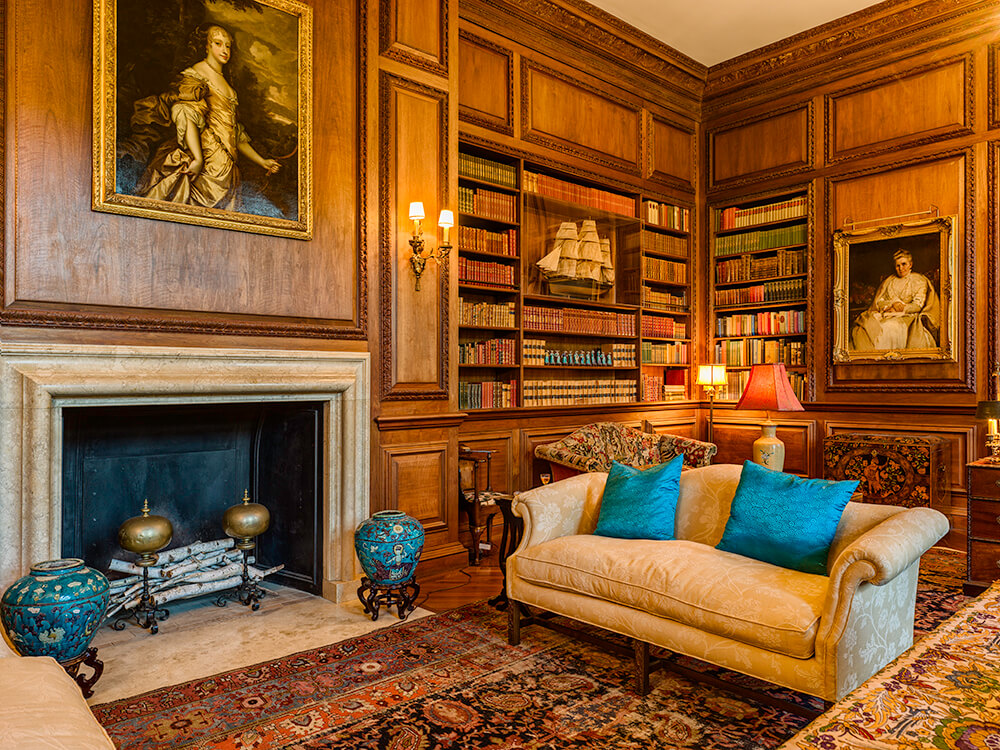
Photo: Courtesy of Mike James - Filoli
Just down the hall is the belle of all ballrooms. “It’s the most glam, glitzy space in the house,” Willa says, describing the chandeliers and Versailles-inspired fireplace. The room also features pastoral wall paintings by Ernest Peixotto. They might look like murals, but they’re actually very large canvases depicting Muckross House. This Irish estate, idyllically situated beside a lake and mountains, was a beloved retreat for the Bourns and a huge inspiration for Filoli’s natural surroundings. “They originally wanted to put Filoli right on the edge of the Crystal Springs reservoirs, but weren’t allowed to get that close,” says Willa, adding that “before these trees grew in later years, you would’ve had a clear view of the water from the second floor of the house and from the top of the garden.”
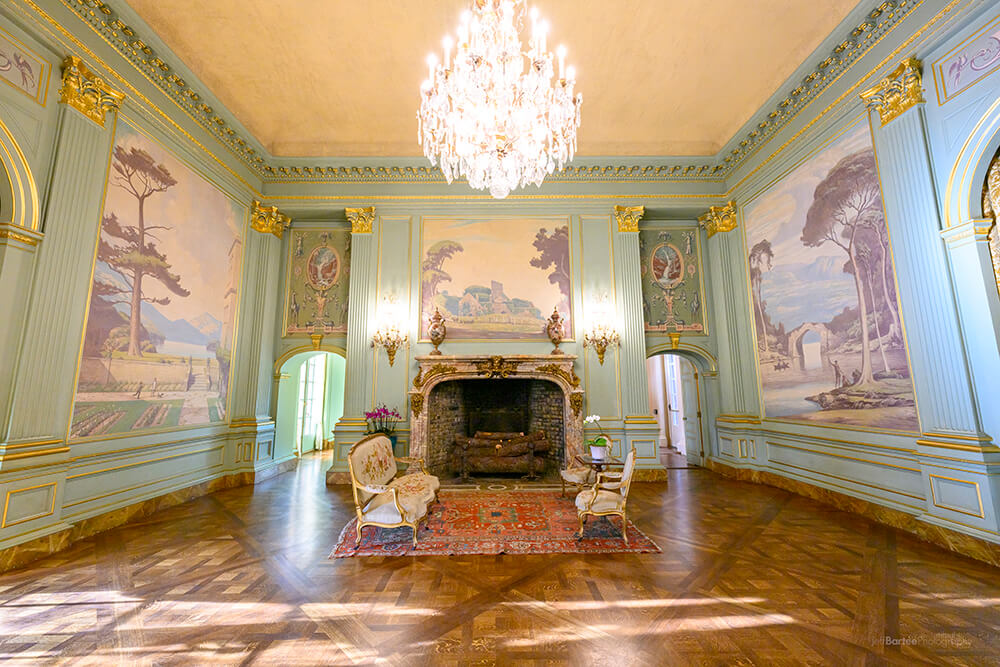
Photo: Courtesy of Jeff Bartee - Filoli
Nurturing Nature
Nature guided the Bourns’ design decisions in numerous ways. Beyond its gorgeous gardens that even world leaders come to see, “Agnes and William wanted [a home] that felt more of the land than on top of the land,” Willa explains. “You arrive at Filoli by riding in on this curvy road through the woods and through the orchards—and you come up around the side of Filoli, you don’t come down one straight path that’s designed to blow you away with this vista of the house. You kind of happen upon it.”
Before the indoor-outdoor concept really took off, the Bourns were adamant about bringing the garden into their grand halls. “The one staff space that’s not tucked away in the south wing is the floral arranging room,” Willa says, noting its central location between the foyer and main staircase. “It is right in the heart of the home.” For this couple, “having live flowers throughout their house was really important—and that’s reflected in the literal architecture of the house.”
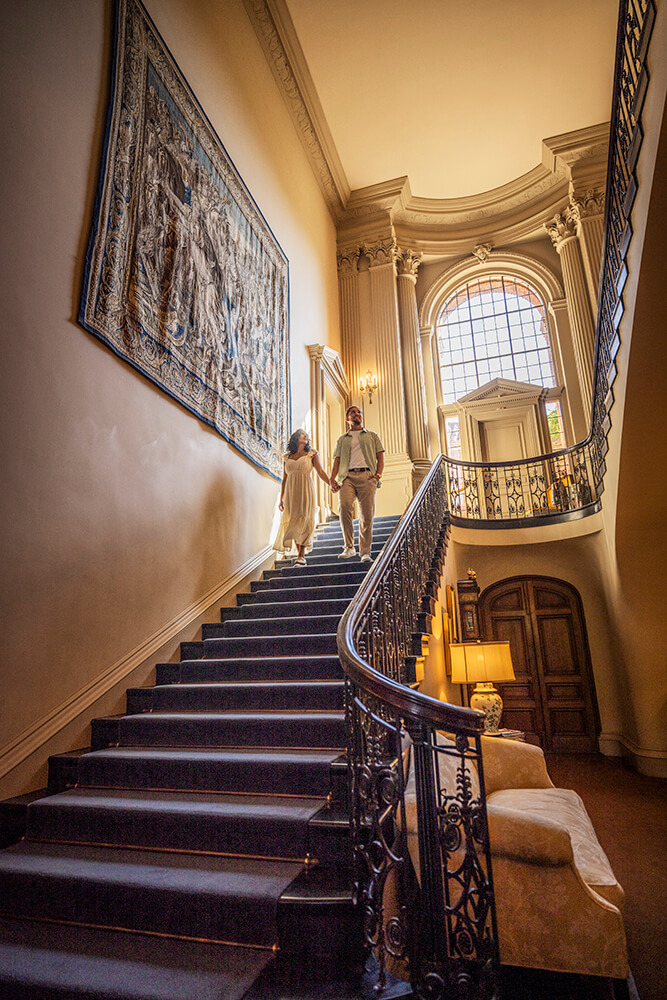
Photo: Courtesy of Jamie Kingham - Abe Froman Producions - Filoli
That outdoor appreciation extended to the home’s siting. The house is aligned with the mountain range rather than a more traditional north-south orientation, Willa describes. “All the windows of the main rooms in the house open up and look out on the Santa Cruz Mountains … Imagine them open on a beautiful day and the scents of the garden coming in.”