


Words by Johanna Harlow
Before it became the residential haven we know and love today, the Peninsula was a playground for San Francisco’s most prosperous denizens. During the Gilded Age, titans of industry and their families escaped the throngs of humanity and constant fog of the City for serene vistas, sunshine and solace at their country estates. Since then, their carriage houses have been replaced by two-car garages, their butlers by doorbell cameras. But tales of their storied estates live on. Step back to this bygone era to find out which neighborhoods once harbored the cavernous Victorian mansions and glamorous gardens of the 19th century’s empire builders.
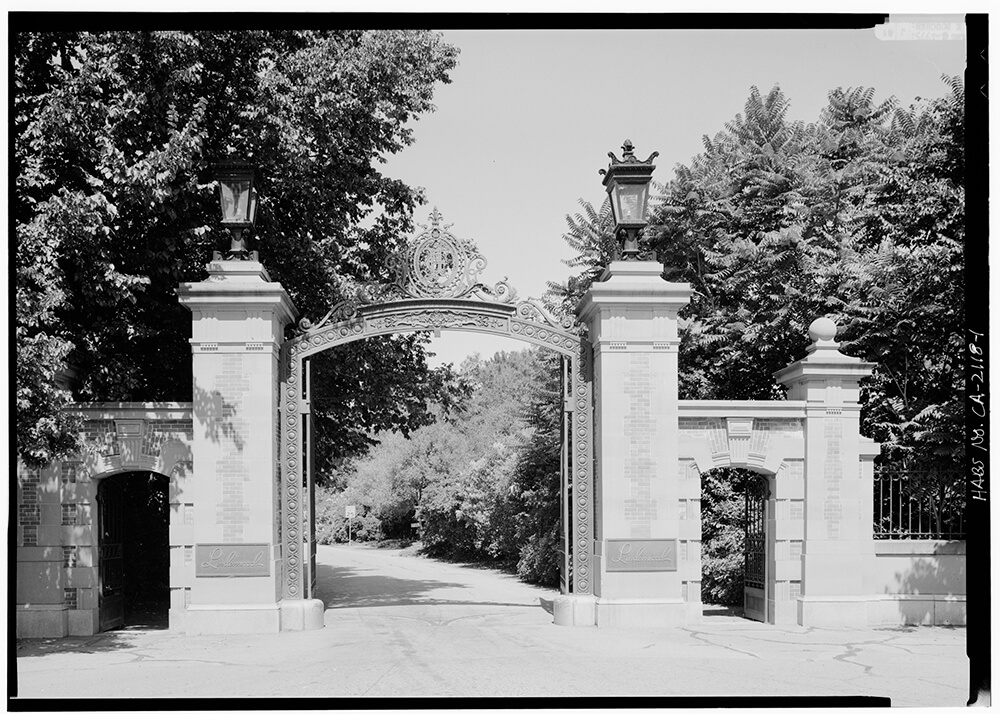
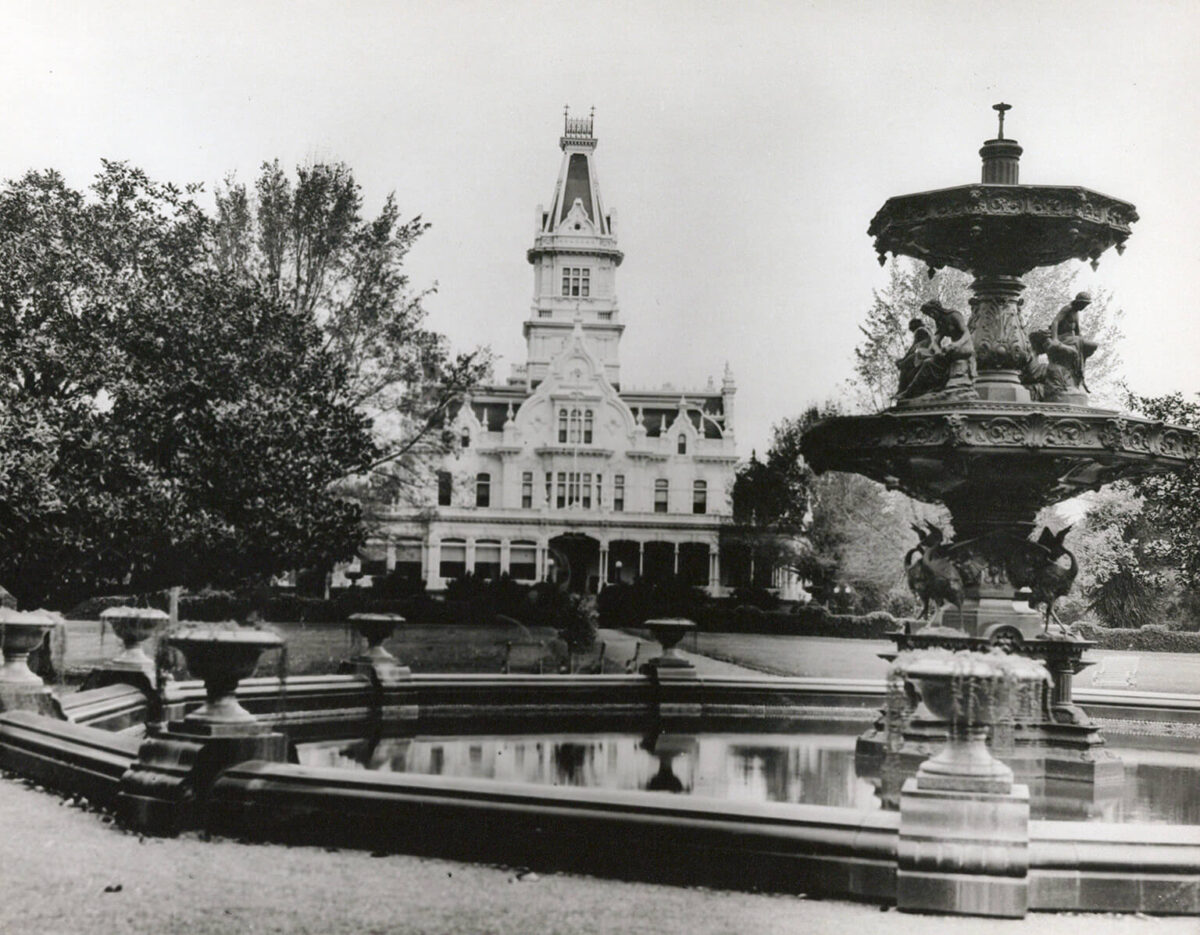
Cover Photo: Linden Towers on the Flood Estate in Atherton, before it became the Lindenwood neighborhood. / Gates Photo: Courtesy of Library of Congress
Lindenwood and the Bonanza King
How does an Irish man with an eighth-grade education go from being an apprentice for a New York carriage-maker to one of the 100 wealthiest Americans of his day with a lavish estate in Atherton? It all begins when James Clair Flood made the decision to head out West and open a tavern in San Francisco. Like all good saloonkeepers, James and his business partner were great listeners—tuning in as stockbrokers blathered over beers.
Joining forces with two miners, James and his partner gleaned insider knowledge of the Nevada silver mines. So while many believed the area had been depleted of its precious metals, the optimistic barkeepers quietly started buying mining shares as they plummeted in price. In 1859, when their miner buddies discovered the “big bonanza,” the largest single silver strike in history, all four men were launched into unimaginable wealth.
Now known as one of the Bonanza Kings, James splurged on a huge home in San Francisco. He also purchased a 600-acre farm in Atherton, where he erected an Italianate mansion decked out with turrets, cupolas and gables. Known as the “White Castle” (or to neighbors as “that beautiful atrocity”), this wedding cake of a mansion was almost seven stories in height with a 150-foot tower. It’s estimated that the paint job alone cost somewhere in the ballpark of $25,000.
After James’ death, the expensive mansion changed hands like a hot potato. It was passed down to James’ daughter, who gifted it to the University of California, which sold it back to her brother. Finally, in 1936, the mansion was demolished, its luscious décor sold at auction and its land divided by developers. Traces of its historic grandeur remain, including the estate’s wrought-iron gates, which still grant entry to all those entering the lovely Lindenwood neighborhood.
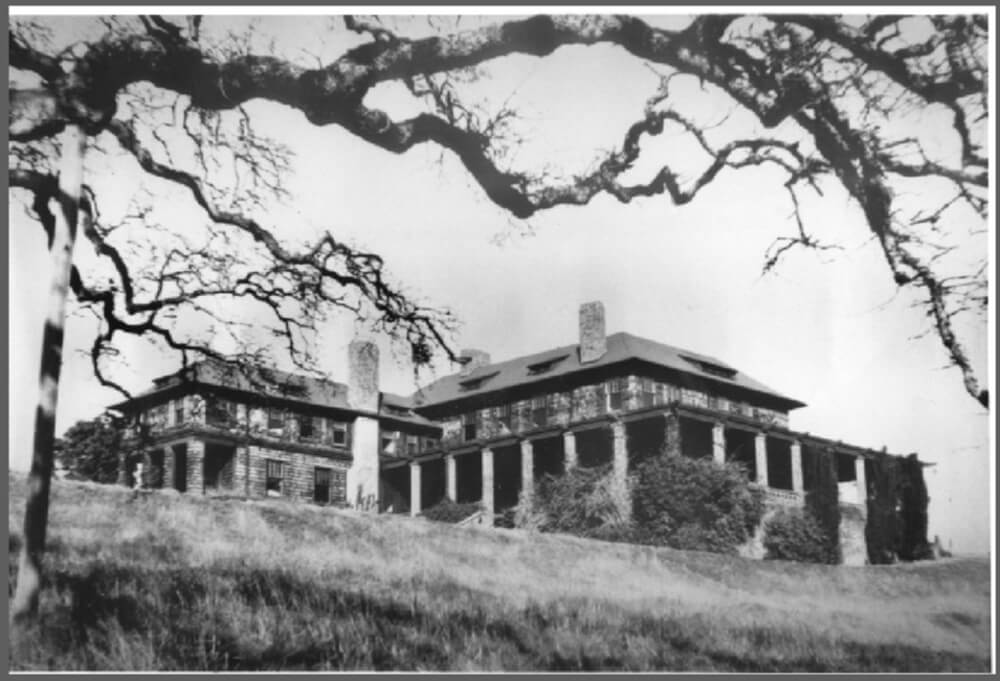
Photo Courtesy of: Menlo Park Historical Association
Scandal in Sharon Heights
You’d never guess it, but the quiet Menlo Park neighborhood known as Sharon Heights hides a scandalous past. The land once belonged to William Sharon, mining tycoon, owner of two luxury hotels and one of the United States’ worst senators (he bought a newspaper to sing his own praises during elections, then neglected his office, missing more than 99 percent of roll call votes). After developing a taste for coke (not the kind you drink) and indulging in a number of dalliances, karma seems to have caught up with this less-than-upright pillar of society. A pretty socialite claimed that William had secretly married her, then sued him for adultery. The trial proceedings included forged documents, a practicing occultist as a witness and pistols drawn in the courtroom. In the end, the socialite married her attorney and was later declared insane. How’s that for some soap opera-level drama?
Apparently, what William lacked in scruples, he made up for in cash. Acquiring a countryside estate among his fellow elite, William made plans to build a mansion and guest cottage on the Peninsula. Though the main house was never built, William and his wife entertained plenty of guests at their 32-room “cottage” furnished with rich tapestries and art treasures from Europe. A small army of 32 gardeners tended the grounds, while eight servants looked after the household. Long, luxurious dinners featured at least eight courses.
Those who later bought the property incorrectly (but understandably) assumed that the vast guesthouse was actually the Sharon mansion. Developed into a residential oasis by Duncan McDonald and Mark Radin in the 1960s, the planned community now holds an idyllic park and many a mid-century ranch-style home.
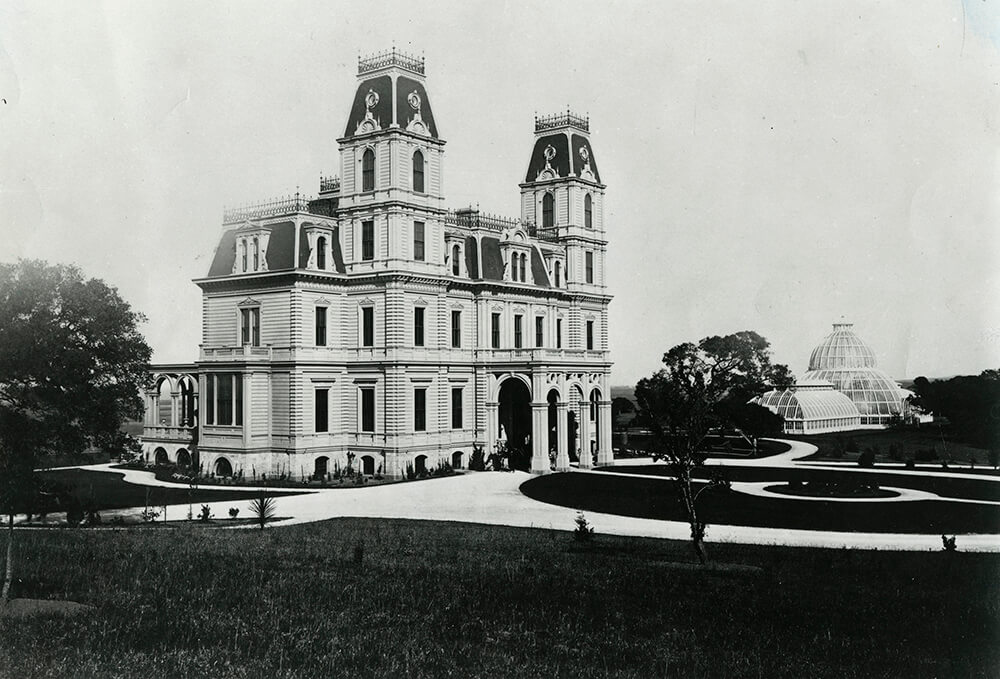
Photo Courtesy of: San Mateo County Historical Association (1971.539A.009)
Wild West to Wealth in Millbrae
To learn about the Rancho Buri Buri neighborhood, travel back in time to the Wild West. In 1835, this area was born out of a Mexican land grant bestowed upon Lt. José Antonio Sánchez (which stretched from what’s now South San Francisco to San Bruno, Millbrae and parts of Burlingame). Used for crops and cattle, the rancho’s land was divvied up among José’s 10 children in his will. Around the time California became the 31st state, the land was sold off to several wealthy elites, among them Darius Ogden (“D.O.”) Mills, founder of the financial institution now known as Union Bank.
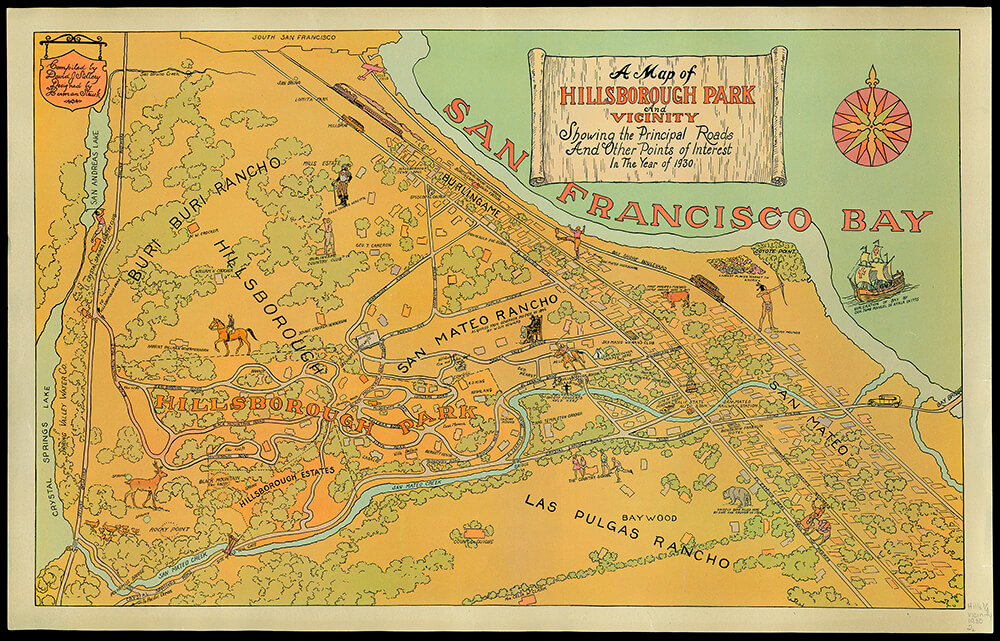
Photo Courtesy of: San Mateo County Historical Association (1969.091)
At the heart of Darius’ 37,000-acre property was a grand three-story building with a striking mansard roof. The family fondly christened it Happy House and filled its 42 rooms with furnishings purchased from the 1867 Paris Exposition. Their sprawling property also boasted a lavish conservatory, carriage house, manicured gardens and artificial lakes as well as a dairy farm (which produced nearly 300,000 gallons of milk for San Francisco over its lifetime). Echoing José’s heirs, Darius’ descendants subdivided the land after his death into what’s now the city of Millbrae and the northern end of Burlingame. Thus, the holdings of a single family ended up in the hands of over 6,000 owners. The Mills’ former cow pasture gave way to the terminals and runways of San Francisco International Airport.
As for the manor itself? Happy House met a not-so-happy ending in the 1950s, when a raging fire reduced it to ash in a matter of hours. You can locate a commemorative plaque in the parking lot of Spring Valley Elementary School in Millbrae, near where the grand mansion once stood.
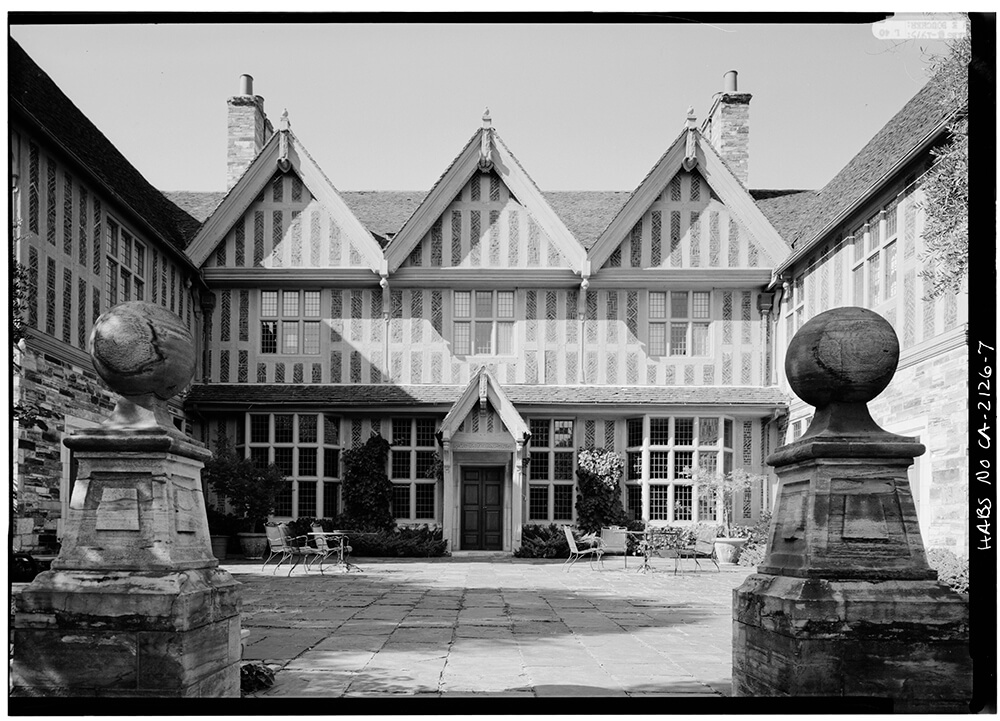
Photo Courtesy of: Library of Congress
Tobin Clark Leaves Her Mark
Way back when, the haven of Hillsborough was once awash in old estates. Among its many mansions: a Cotswold Tudor belonging to banking heiress Celia Tobin Clark. The aptly named House-on-Hill is considered a jewel in prolific architect David Adler’s dazzling career. But he wasn’t Celia’s first choice. The heiress had originally turned to friend and architect Arthur Brown Jr. for the project—but on seeing his plans for an imposing French chateau, Celia decided to seek another architect to breathe life into her quiet retreat. The project, started the same year as the Great Depression, employed many down-on-their-luck artisans and builders and even revived a failing planing mill to supply the oak planks. When the dust had cleared, Celia’s sanctuary was adorned with Van Dyke paintings, harlequin-pattern black-and-white marble tile, furniture from Europe and scrollwork by England’s finest wood carver, Grinling Gibbons.
Over the years, the manor’s music room played host to the Flonzaly, Lener and Budapest string quartets and its lavish bedrooms received presidents (yes, several). And although Celia’s 250-acre property may have shrunk down to a mere six acres today, her home still watches over the hilly Tobin Clark Estate neighborhood, which was developed in the 1970s.
Other grand Hillsborough homes, like the Carolands, Rosecourt, Fagan and Newhall estates, also survived on smaller lots surrounded by subdivision homes. Meanwhile, the Skyfarm, Uplands and Kohl estates became centerpieces for schools (The Nueva School, Crystal Springs Uplands and Mercy High, respectively). Only a few, like Villa Rose and Guignécourt, remain intact.
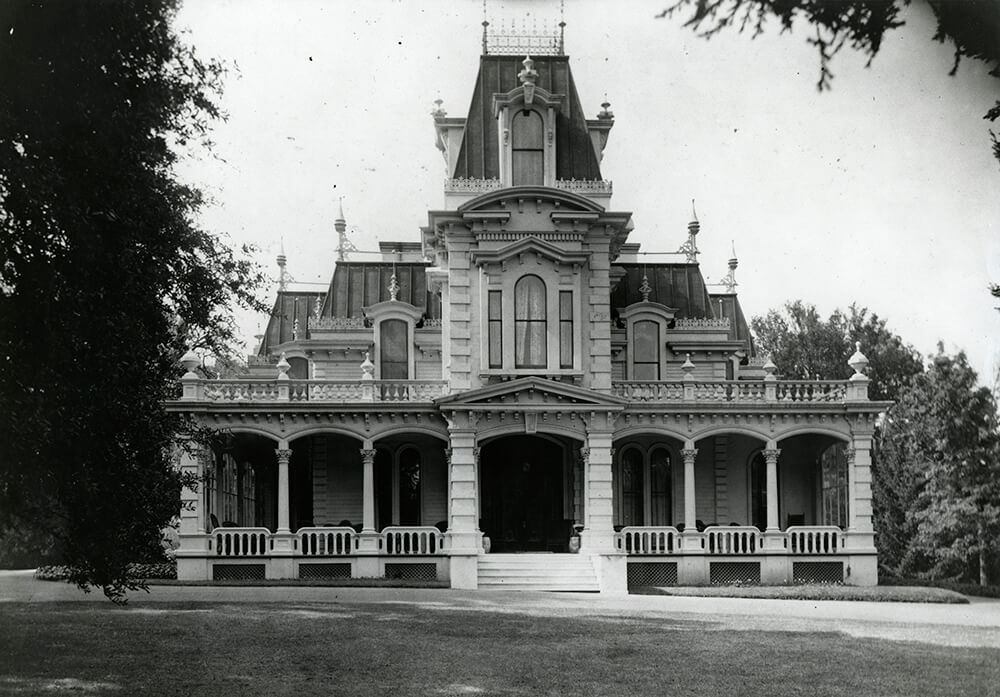
Photo Courtesy of: San Mateo County Historical Association (1968.204A.002B)
The Banker Behind Baywood
Next on our historic meet-and-greet, get to know John Parrott, a colorful character behind San Mateo’s beautiful Baywood neighborhood. A trader in his early years, this southern gentleman was appointed U.S. Consul to Mazatlán, Mexico, in 1838, succeeding his brother in the post. During his dozen years at the American Consulate, John promoted international trade and commerce. He also sired a couple of illegitimate children and almost started a war. John’s inflammatory report with misleading information about conflict between the U.S. and Mexico spurred a commodore to action and resulted in the seizing of a Mexican village before the misunderstanding was finally cleared up.
Despite engaging in a bit of smuggling in his youth, John became known as a reputable banker upon his return to the States around 1850. He married Abigail Eastman Meaher, one of his daughter’s classmates, fathered eight more children with her and bought Baywood in 1859. His French Second Empire-style summer home had hydraulic elevators and sat on a comfortable 377 acres. After his death, his widow became locally known as a patron of the poor. It’s said Abigail fed somewhere around 300,000 hungry people at a campground expressly built for that purpose.
Subdivided and developed in 1927, Baywood is a highly-desirable historic neighborhood with a mix of French, Spanish revival and Tudor-style homes along its winding streets, along with St. John’s Cemetery, built on land donated by Abigail. Hillsborough’s Parrott Drive neighborhood also once was part of the original Parrott property.