


Words by Johanna Harlow
As a child, Susan McConnell fondly recounts visits to a colony of wood rats who’d taken up residence in a collapsed barn near her family’s home. “I spent hours as a little girl watching them,” Susan recalls, a twinkle in her eyes. “They were so interesting—all their behaviors!” Ardent about creatures great and small, she devoured animal books like Black Beauty and Old Yeller, and cared for a plethora of pets (hamsters, gerbils, parakeets, canaries, fish, lizards, dogs, horses … anything her parents would allow). It’s no great shock that Susan became a wildlife photographer. When she’s not plunging into the jungles of Central America, the savannas of sub-Saharan Africa or the tundra of the high Arctic to capture images of the wild and the wonderful, she works as a neuroscientist and biology professor at Stanford University.
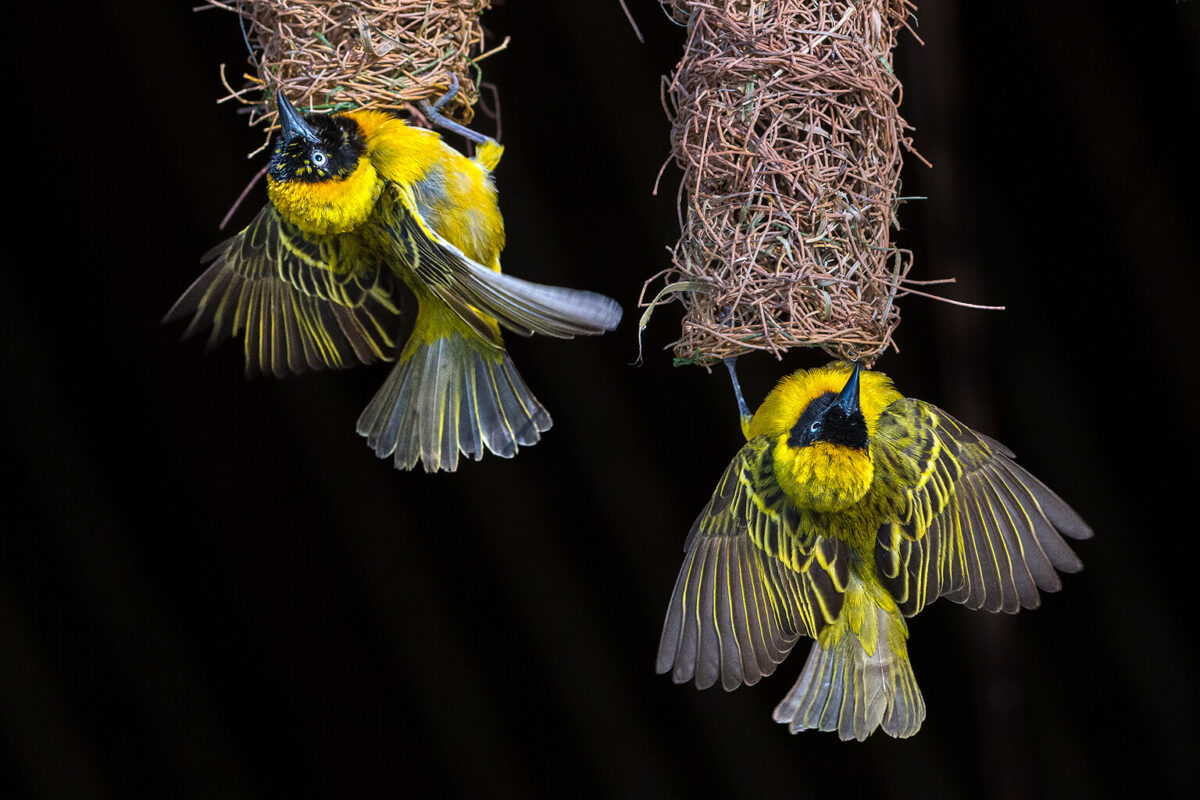
Susan’s images invite you in—from a pair of tussling fox cubs or a horde of sea lions jockeying for position on the rocks to a baby elephant trundling beside its mother’s legs or a cheetah solemnly locking eyes with the viewer. And she doesn’t shy away from nature’s visceral side with her unflinching depictions of the hunt. On an upcoming trip to Tanzania’s Nyerere National Park to encounter newborn impalas, Susan notes, “It’s a big buffet for predators, for wild dogs, for lions, for leopards. I know, it’s sad. But it’s a wonderful time of year. Everything’s green and very pretty, and the animals are very active because life is everywhere.”
Field Trips
For several years, Susan served as a docent at Año Nuevo. “It’s such a soap opera,” she says of all those elephant seals galumphing up the shore for the breeding and birthing seasons. But she notes a particular fondness for the slow days during the off-season. “For me, it was amazing to feel the rhythm of the tide,” she says—the literal rise and fall of the water, but also the daily rituals of the animals, like the coyote who would trot down the beach looking for lunch around the same time every day.
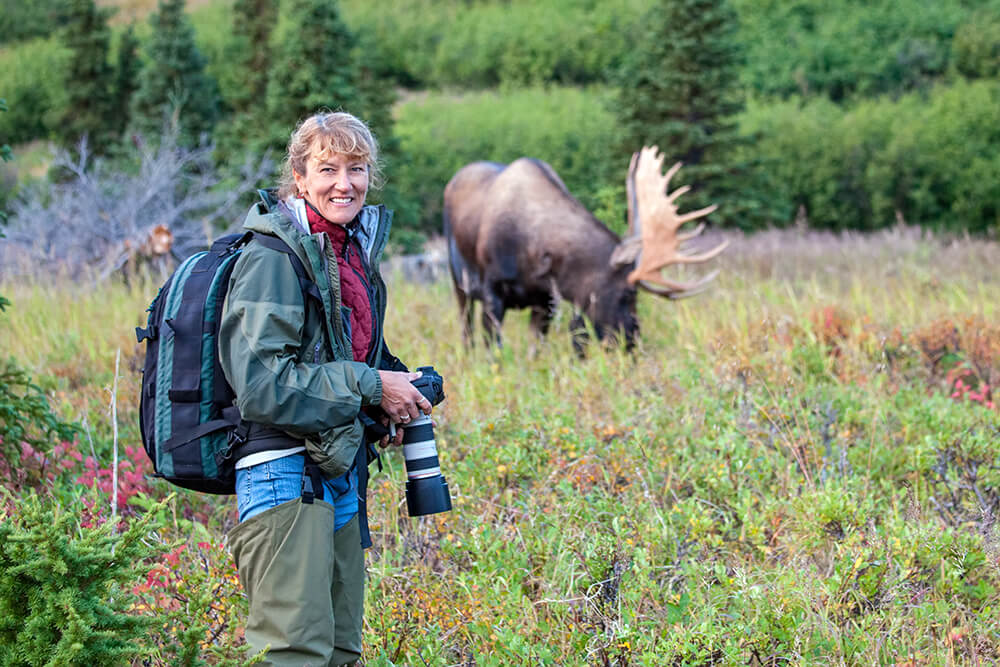
Susan’s deep fascination with creatures and their habits produces a trait that’s crucial for wildlife photography: patience. Waiting for hours to capture the right moment isn’t a chore for her. “The more time you spend in the field, the better the images you are able to get,” Susan explains. “A lot of the best images are going to happen within a heartbeat. The more you understand animal behavior, the more you can predict when those things might happen and be ready for it.”
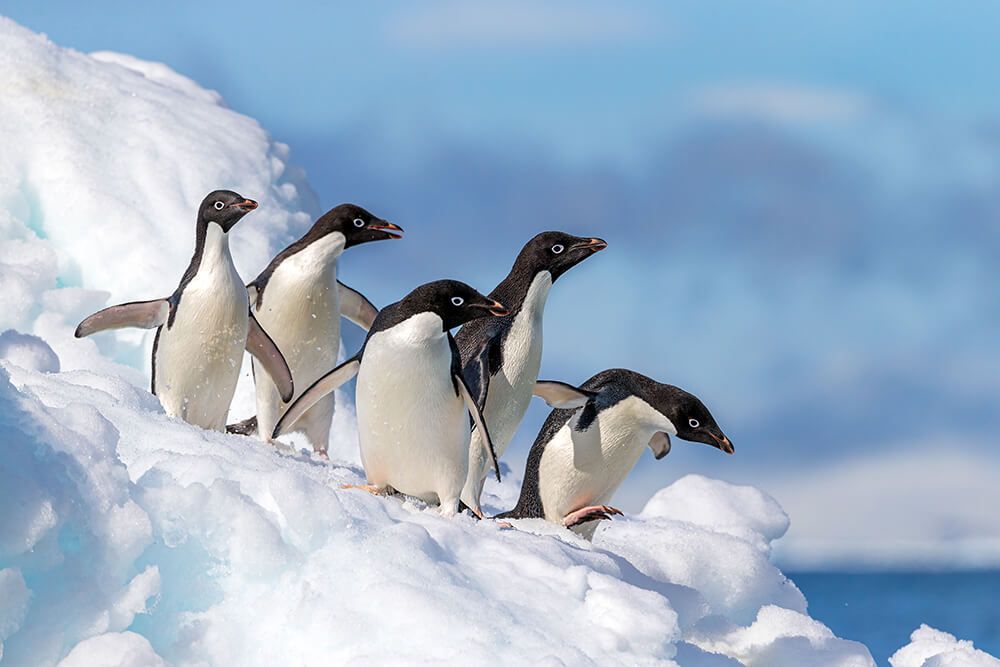
What does Susan hope to elicit with these glimpses into the wild life? “To try to give people a sense of connection, empathy, respect, awe for these incredible animals, whether it is a dung beetle or a leopard, a red-eyed tree frog or an elephant,” she shares. “Stephen J. Gould, I think said it best … ‘We will not fight to save what we do not love.’”
A New Lens on Life
Susan didn’t always aspire to be a photographer. It took a trip to the high Arctic for her to fully warm up to the idea. “I was really ambivalent about having the box—the camera—in front of my face, and whether that was distancing me from the experience or bringing me into the experience,” she recalls. While on a voyage to Svalbard 20 years ago, Susan spotted polar bears jumping from ice flow to ice flow. Joining other photographers on the deck with her recently bought digital camera, she started snapping away—and couldn’t seem to stop. That day, Susan discovered there was an art to timing the shot, to pressing the shutter down just as the polar bear rocked back her weight and made the leap. “My lens kept fogging up and my fingers were so numb from cold that I couldn’t actually feel the shutter button anymore. And despite all of that, there was this moment where I just had this epiphany: That I have never been happier in my entire life,” she recalls.
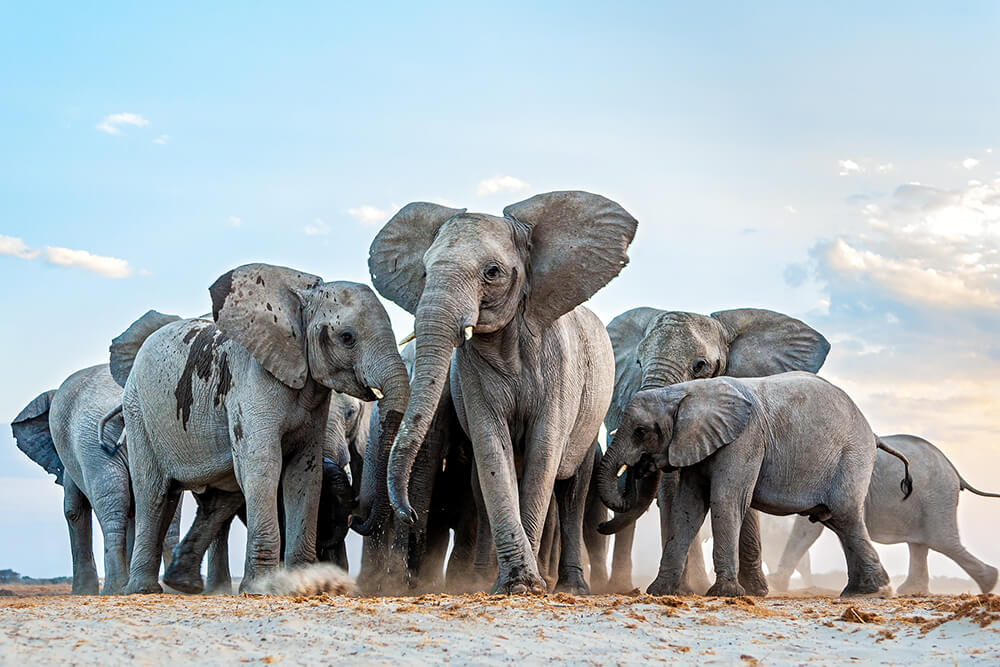
Since then, Susan’s images have been used by National Geographic (in the magazine, books and website). Another of her photos of a young bull elephant—ears fanned out, eyes alert as he observes his observers safely ensconced in their concrete bunker—made the cover of Smithsonian Magazine.
This powerful pachyderm picture resulted from a collaboration with Stanford ecologist and author Caitlin O’Connell-Rodwell on a feature story about the relationships of bull elephants in Namibia. “It was the first time that I’ve gotten a formal assignment from a magazine, first and last really,” says Susan, explaining that photographers who do this kind of work full-time can spend months, even years, developing a story. “It takes a level of devotion and commitment that I cannot tell you how much I admire,” she says. But it’s not what drives her. “What I really love is working with conservation organizations and teaching,” she reflects.
Untamed Encounters
Venturing into out-of-the-way places for encounters with the untamed comes with a level of unpredictability. “With wildlife, it’s their world and their rules,” Susan emphasizes. “The last thing we want to do is disrupt the animals’ lives, disturb their behavior.” Even so, close calls come with the territory. On a horseback safari, “[we were] treated by a pride of lions as if we were buffalo,” Susan recalls. “I’ve been chased in vehicles by elephants and by rhinos. I’ve been chased in a canoe by a hippo. That was a heart-pounder.” Susan says it’s imperative to find a guide with a healthy respect for the wild and the expertise to keep both you and the animals safe.
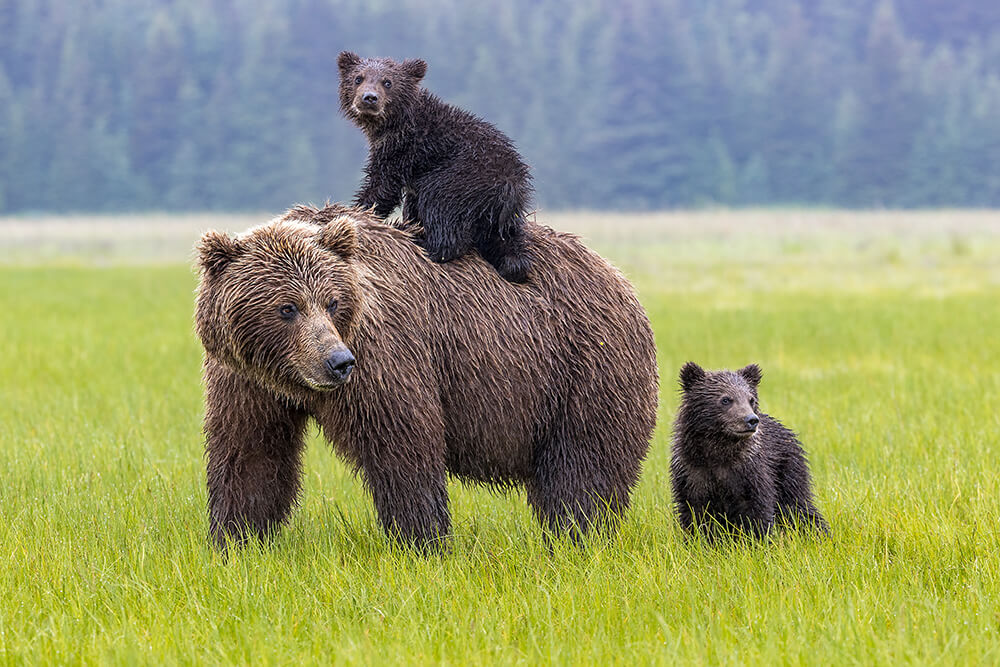
Environment also plays a factor. “There are certain parts of Alaska, like Lake Clark and Brooks Falls, where there’s a lot of food around and the bears don’t really care about people and you can get really close,” Susan says. Take that assumption elsewhere, however, and you could find yourself in a sticky situation.
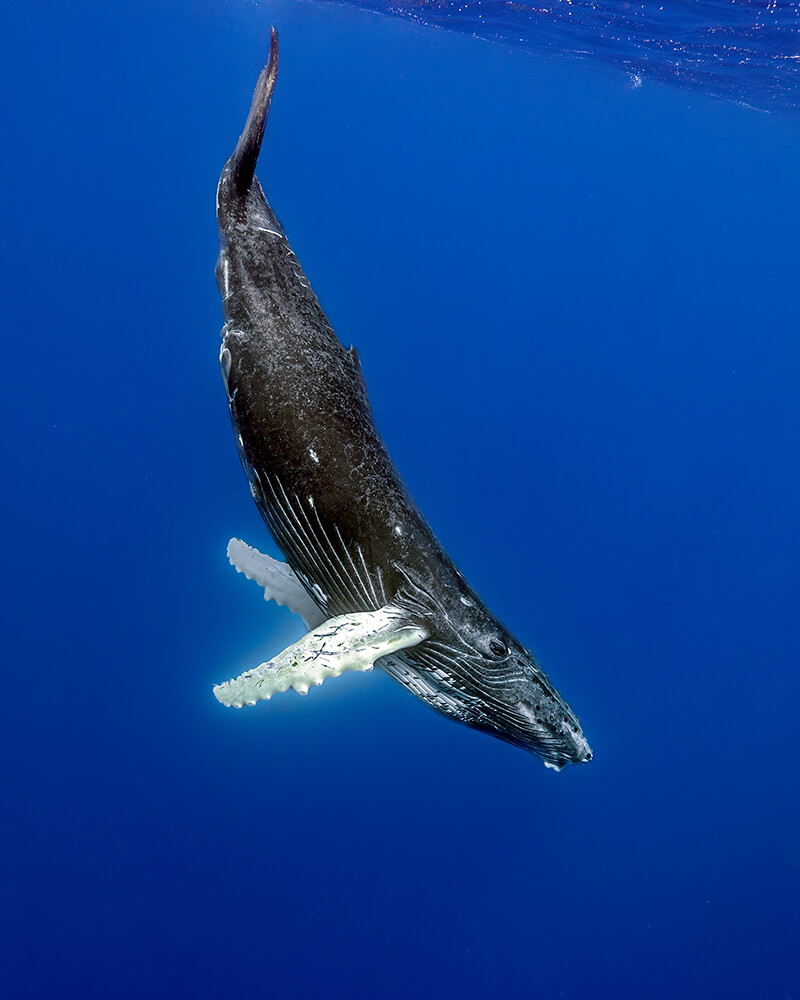
Respecting nature’s wildness is also crucial out in the briny deep. Susan brings up another anecdote, this one a tale about a whale. “Some of the whales can be quite … playful?” Susan chuckles as she recalls swimming with humpbacks and their calves in Tonga. “There was this one female whale who wanted to play with us. She was like a big puppy—and it was terrifying. We were like, ‘Get us out of the water now. We do not want to play with the whale!” The whale had Susan so preoccupied, she was unaware that another one was headed her way. “I ended up being directly in his path,” she says. Looking down, she saw a semi-truck-sized body passing inches beneath her. “I tucked into a cannonball and he swam his entire body length right underneath me!” If the whale had chosen to dive and struck Susan with its tail, the impact could have been lethal. Instead, “very gently, he lifted his left fluke and tapped my thigh,” she says. Just a gentle greeting from a friendly giant.
Nature Vs. Nurture
Susan’s life isn’t all grand adventures and close calls. When she’s not heading out on safari, she’s teaching classes at Stanford or studying neural circuits and brain development. She’s always found herself intrigued by the age-old question of nature versus nurture. (“What things do you just do because it’s programmed? And what things do we have to be taught?”)
“I think about these two parts of my life as two different trees that have grown out of the same root system, and that’s a love of animal behavior,” muses Susan, who has also achieved the honor of being elected as a member of the National Academy of Sciences. The class she finds most rewarding to teach is conservation photography and she’s led three-week conservation courses overseas through Stanford, helping students get hands-on as they head into the field. “Getting people to care and to be curious,” Susan says, is the best way to ensure that wildlife survives and thrives.
Inspiring Stories
While her love for animals certainly drives her, there’s another influence that’s impacted Susan’s trajectory, this one human. “When I was little, I discovered a stack of National Geographic magazines piled up next to my grandparents’ television set,” she recalls. In those pages, Susan came across Jane Goodall, the primatologist studying chimpanzee societies and behavior in remote Tanzania. “For me, that was one of the most romantic things,” Susan says. “She is the reason that I’m a scientist.” She adds, “I didn’t have any scientists in my family. It had never occurred to me that this was even an option.”
She’s certainly made her parents proud. In 2012, Susan and her mom visited the Smithsonian National Museum of Natural History, where one of Susan’s photos was displayed. The image—a touching moment of a baby elephant being rescued from a water trough through the combined efforts of mother and aunts—was selected by Windland Smith Rice International Awards for the Nature’s Best Photography contest. “It was so much fun because we’d be lurking in the gallery to see who might interact with my photo,” Susan chuckles. “Every time [my mom] saw someone who would stop and look at my photo, she would spring up from the bench that we were sitting on and rush over and say, ‘My daughter took that photo and she’s sitting right there!’”